A Practical Guide to E-commerce Analytics Setup
Configuring measurement so a store's traffic, revenue and funnel data can be trusted.
 MediaScaleUp Editorial Team

Why does it matter?
Store analytics that disagree with the order system make every marketing decision questionable.
What are the numbers?
- Purchase tracking must fire once per order with accurate values
- Refunds should be reflected in reporting
- Currencies multi-currency stores need consistent reporting
- Consent consent settings change what is measured
What should I do?
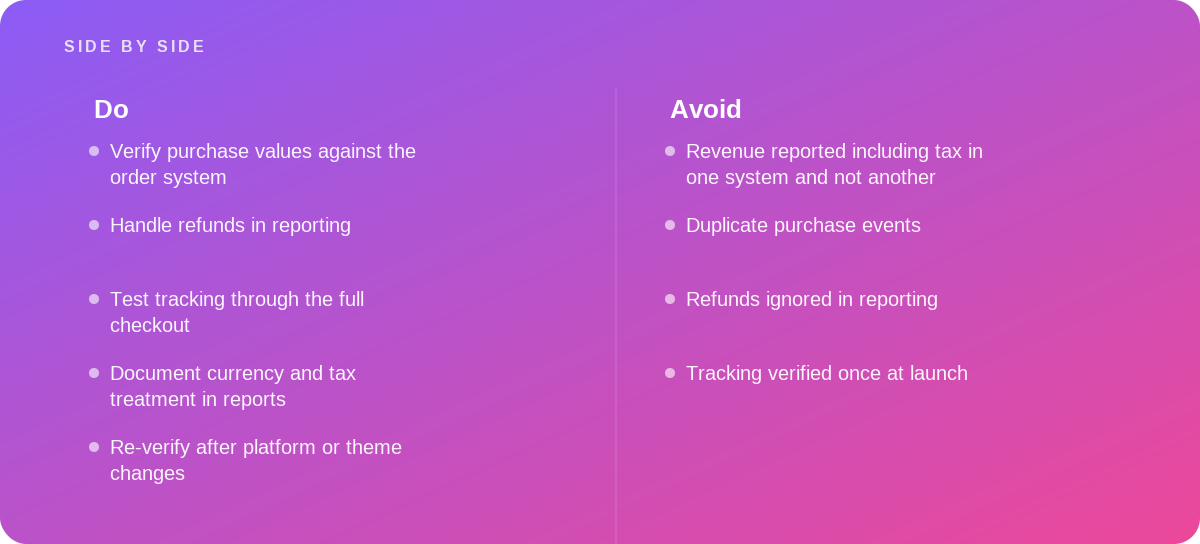
- Verify purchase values against the order system
- Handle refunds in reporting
- Test tracking through the full checkout
- Document currency and tax treatment in reports
- Re-verify after platform or theme changes
What should I avoid?
Avoid:
- Revenue reported including tax in one system and not another
- Duplicate purchase events
- Refunds ignored in reporting
- Tracking verified once at launch
When should I get help?
Short answer Bring in help when analytics and orders disagree.
Where this comes from
- Google Analytics Help — Ecommerce measurement
- Shopify Help Center — Analytics
The figures and practices above come from the sources listed.
Working on something like this?
We take on E-commerce Development work for teams who want it done once, properly. Tell us what you are building and we will tell you honestly whether we are the right studio for it. Start a project.
Where to go next
Spotted something wrong? Report an error on this page. We correct on the page and say what changed.