Social Commerce: The Decisions That Matter
Selling products directly through social platforms, such as shops on Instagram, Facebook and TikTok, using product catalogs connected to the store.
 MediaScaleUp Editorial Team

Where most projects go wrong
The usual mistakes:
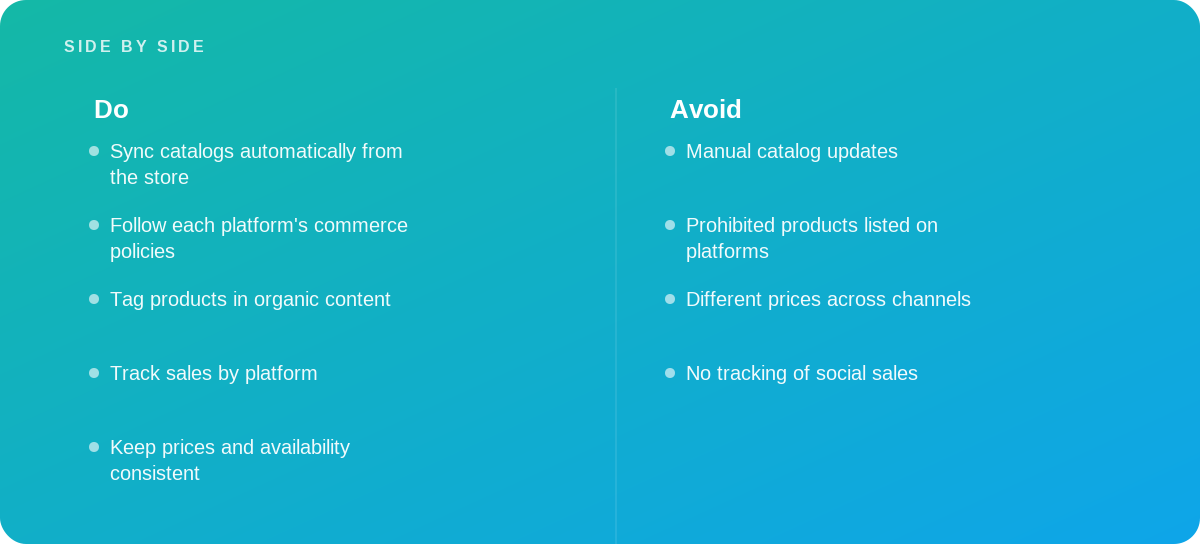
- Manual catalog updates
- Prohibited products listed on platforms
- Different prices across channels
- No tracking of social sales
What good looks like instead
- Sync catalogs automatically from the store
- Follow each platform's commerce policies
- Tag products in organic content
- Track sales by platform
- Keep prices and availability consistent
Why it matters
Social commerce shortens the path from discovery to purchase, but it requires catalog syncing and platform policy compliance.
The specs that matter
| Measure | Figure |
|---|---|
| Catalogs | product feeds connect store data to platforms |
| Meta | Commerce Manager manages shops on Facebook and Instagram |
| Policies | platforms have commerce and product policies |
| Checkout | some platforms support native checkout |
Knowing when to hand it over
Tip: Bring in help when launching shops on social platforms.
Where this comes from
- Meta Business Help Center — About Commerce Manager
- TikTok for Business — TikTok Shop
The figures and practices above come from the sources listed.
Working on something like this?
We take on E-commerce Development work for teams who want it done once, properly. Tell us what you are building and we will tell you honestly whether we are the right studio for it. Start a project.
Where to go next
Spotted something wrong? Report an error on this page. We correct on the page and say what changed.