Dropshipping: The Decisions That Matter
Selling products that a supplier ships directly to customers, so the store never holds inventory itself.
 MediaScaleUp Editorial Team

Where most projects go wrong
The usual mistakes:
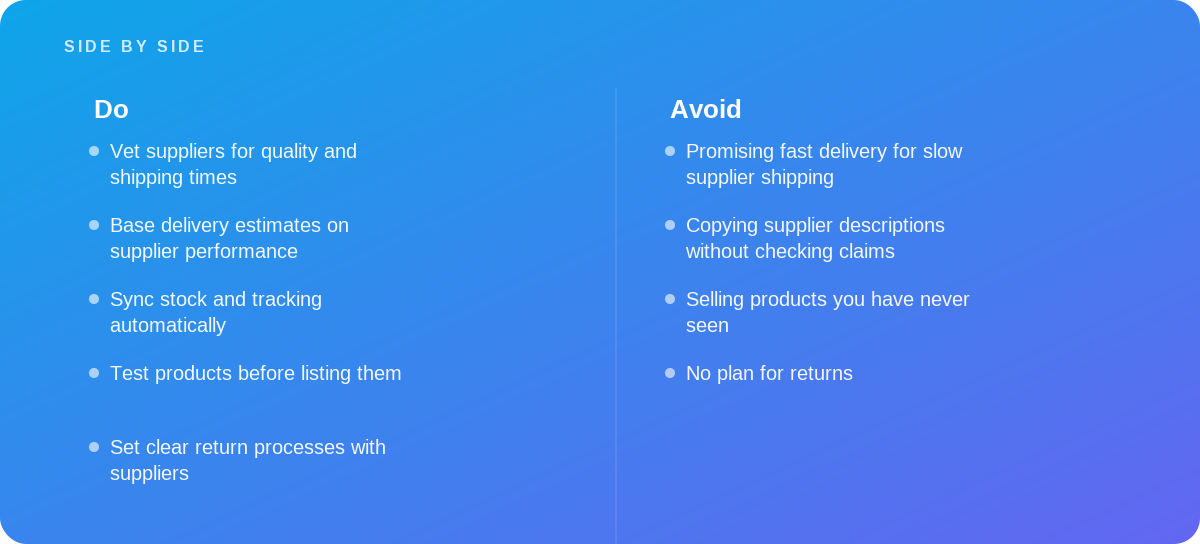
- Promising fast delivery for slow supplier shipping
- Copying supplier descriptions without checking claims
- Selling products you have never seen
- No plan for returns
What good looks like instead
- Vet suppliers for quality and shipping times
- Base delivery estimates on supplier performance
- Sync stock and tracking automatically
- Test products before listing them
- Set clear return processes with suppliers
Why it matters
Dropshipping lowers upfront costs, but the store remains responsible for shipping promises, product claims and customer service.
The specs that matter
| Measure | Figure |
|---|---|
| FTC Mail Order Rule | still applies to shipping promises when a supplier ships |
| Product claims | the seller is responsible for claims made in listings |
| Returns | policies must be clear and workable with suppliers |
| Supplier data | stock and tracking information must flow back to the store |
Knowing when to hand it over
Tip: Bring in help when delivery complaints rise, or when choosing suppliers and integrations.
Where this comes from
- Federal Trade Commission — Business Guide to the Mail, Internet, or Telephone Order Merchandise Rule
- Shopify Help Center — Dropshipping
The figures and practices above come from the sources listed.
Working on something like this?
We take on E-commerce Development work for teams who want it done once, properly. Tell us what you are building and we will tell you honestly whether we are the right studio for it. Start a project.
Where to go next
Spotted something wrong? Report an error on this page. We correct on the page and say what changed.