Writing Release Notes: What Actually Works
Short documents that tell users what changed in a product release, from new features to fixes and deprecations.
 MediaScaleUp Editorial Team

Where most projects go wrong
The usual mistakes:
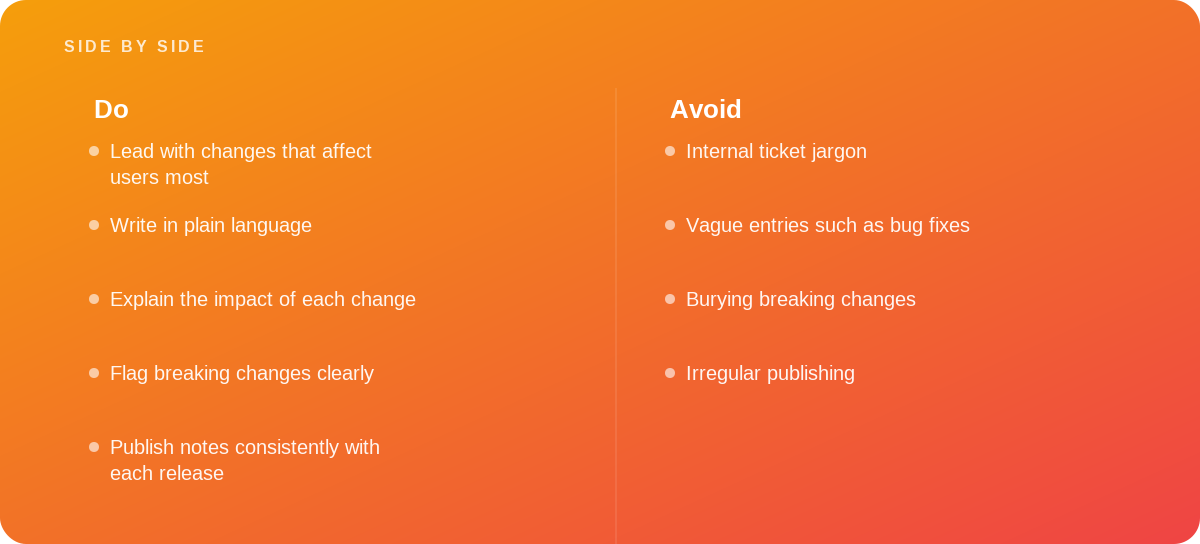
- Internal ticket jargon
- Vague entries such as bug fixes
- Burying breaking changes
- Irregular publishing
What good looks like instead
- Lead with changes that affect users most
- Write in plain language
- Explain the impact of each change
- Flag breaking changes clearly
- Publish notes consistently with each release
Why it matters
Good release notes reduce support tickets and help customers adopt new features, while vague notes leave users confused.
The specs that matter
| Measure | Figure |
|---|---|
| Audience | release notes serve users, admins and developers differently |
| Categories | new features, improvements, fixes and deprecations |
| Breaking changes | need prominent notice and migration steps |
| Links | notes should link to fuller documentation |
Knowing when to hand it over
Tip: Bring in help when products release frequently.
Where this comes from
- Google for Developers — Google developer documentation style guide
- Microsoft Learn — Microsoft Writing Style Guide
The figures and practices above come from the sources listed.
Working on something like this?
We take on Content Strategy work for teams who want it done once, properly. Tell us what you are building and we will tell you honestly whether we are the right studio for it. Start a project.
Where to go next
Spotted something wrong? Report an error on this page. We correct on the page and say what changed.