Spanish-Language Content for US Audiences: The Decisions That Matter
Creating and localizing content for Spanish speakers in the United States.
 MediaScaleUp Editorial Team

What is at stake
Spanish is the most common non-English language spoken at home in the US, and poor translations undermine trust.
The playbook
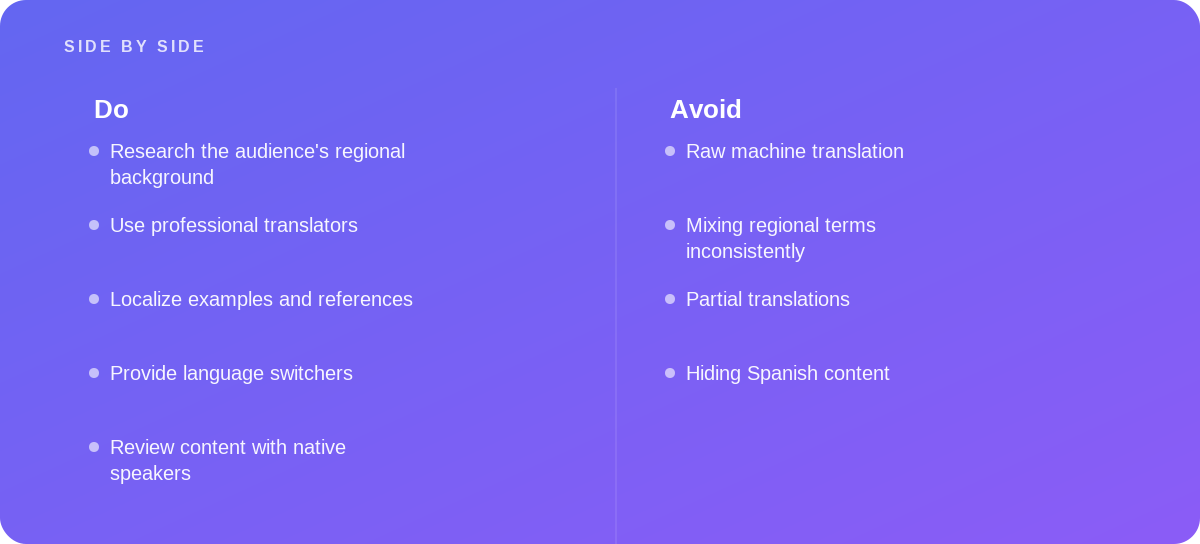
- Research the audience's regional background
- Use professional translators
- Localize examples and references
- Provide language switchers
- Review content with native speakers
Where it goes wrong
Avoid:
- Raw machine translation
- Mixing regional terms inconsistently
- Partial translations
- Hiding Spanish content
The numbers behind it
| Measure | Figure |
|---|---|
| Census data | Spanish is the most common language other than English spoken at home in the US |
| Regional variation | vocabulary differs across Spanish-speaking communities |
| Hreflang | es-US can target Spanish content for US users |
| Quality | professional translation and review improve accuracy |
Getting outside help
When to hand it over: Bring in help when launching Spanish-language services.
Where this comes from
- U.S. Census Bureau — Language Spoken at Home
- Google Search Central — Tell Google about localized versions of your page
The figures and practices above come from the sources listed.
Working on something like this?
We take on Content Strategy work for teams who want it done once, properly. Tell us what you are building and we will tell you honestly whether we are the right studio for it. Start a project.
Where to go next
Spotted something wrong? Report an error on this page. We correct on the page and say what changed.