Emoji and Special Characters in Content, Done Properly
Using emoji, symbols and decorative characters in web content, social posts and email.
 MediaScaleUp Editorial Team

At a glance
- Screen readers announce emoji using their names
- Unicode defines emoji and their names
- Rendering emoji look different across platforms
- Fancy text stylized Unicode letters may be read as symbols or skipped
Why it matters
Why it matters: Emoji add personality, but screen readers announce them by name and decorative characters can make content unreadable.
Best practice
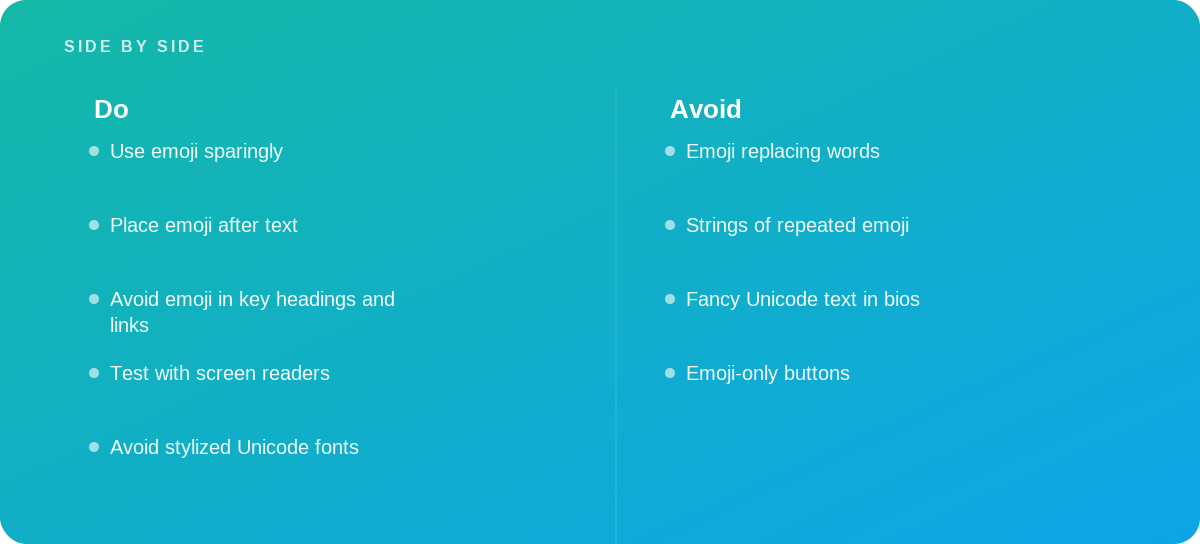
- Use emoji sparingly
- Place emoji after text
- Avoid emoji in key headings and links
- Test with screen readers
- Avoid stylized Unicode fonts
Common pitfalls
Watch out for:
- Emoji replacing words
- Strings of repeated emoji
- Fancy Unicode text in bios
- Emoji-only buttons
When to call in a specialist
Bottom line Bring in help when social or email styles rely on emoji.
Where this comes from
- Unicode Consortium — Unicode Emoji
- The A11Y Project — Checklist
The figures and practices above come from the sources listed.
Working on something like this?
We take on Content Strategy work for teams who want it done once, properly. Tell us what you are building and we will tell you honestly whether we are the right studio for it. Start a project.
Where to go next
Spotted something wrong? Report an error on this page. We correct on the page and say what changed.