Social Proof: What Actually Works
Using evidence of other people's choices, such as reviews, ratings, customer logos, testimonials and usage numbers, to reassure prospective customers.
 MediaScaleUp Editorial Team

What is at stake
Social proof reduces perceived risk, but fabricated or misleading proof violates FTC rules and damages trust.
The playbook
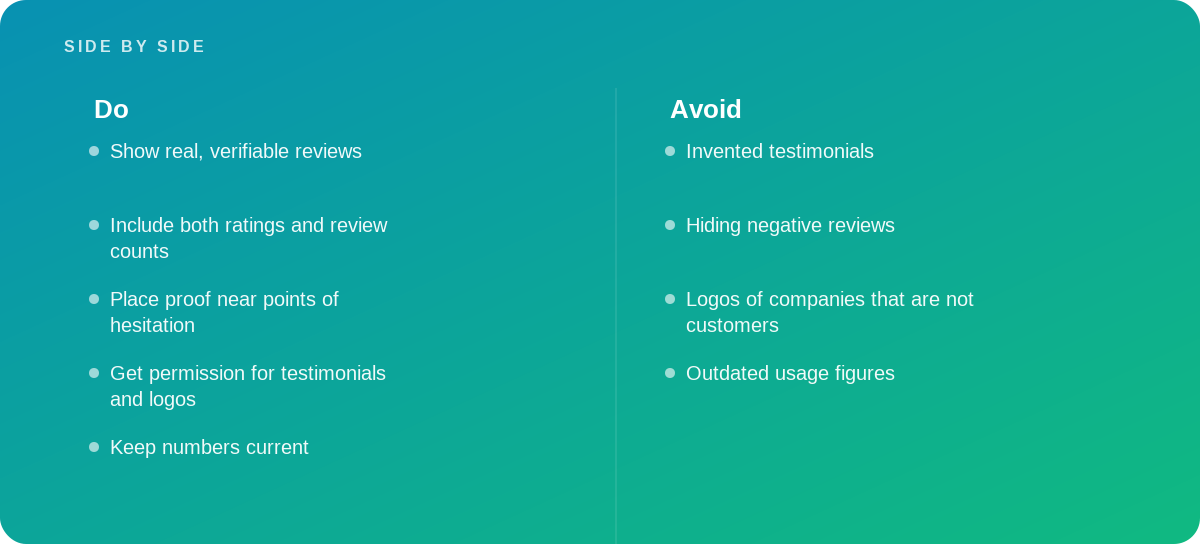
- Show real, verifiable reviews
- Include both ratings and review counts
- Place proof near points of hesitation
- Get permission for testimonials and logos
- Keep numbers current
Where it goes wrong
Avoid:
- Invented testimonials
- Hiding negative reviews
- Logos of companies that are not customers
- Outdated usage figures
The numbers behind it
| Measure | Figure |
|---|---|
| Forms | reviews, ratings, testimonials, case studies, logos and counts |
| FTC rule | fake reviews and testimonials are prohibited |
| Typicality | testimonials should not imply results most customers do not get |
| Placement | near decisions such as pricing and checkout |
Getting outside help
When to hand it over: Bring in help when building review programs, or when legal review of testimonials is needed.
Where this comes from
- Federal Trade Commission — Trade Regulation Rule on the Use of Consumer Reviews and Testimonials
- Baymard Institute — Product page UX research
The figures and practices above come from the sources listed.
Working on something like this?
We take on Digital Marketing & CRO work for teams who want it done once, properly. Tell us what you are building and we will tell you honestly whether we are the right studio for it. Start a project.
Where to go next
Spotted something wrong? Report an error on this page. We correct on the page and say what changed.