Returns Portals and Exchanges: The Decisions That Matter
Self-service tools that let customers start returns and exchanges online, print labels and track refunds.
 MediaScaleUp Editorial Team

Where most projects go wrong
The usual mistakes:
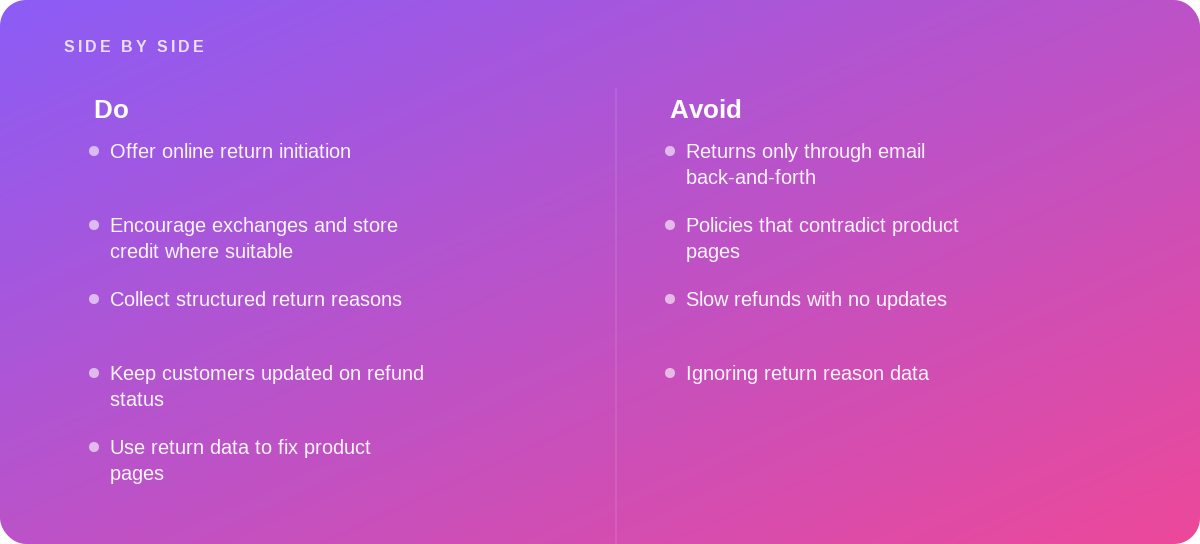
- Returns only through email back-and-forth
- Policies that contradict product pages
- Slow refunds with no updates
- Ignoring return reason data
What good looks like instead
- Offer online return initiation
- Encourage exchanges and store credit where suitable
- Collect structured return reasons
- Keep customers updated on refund status
- Use return data to fix product pages
Why it matters
Easy returns build trust and repeat purchases, and self-service reduces support workload.
The specs that matter
| Measure | Figure |
|---|---|
| Self-service | customers start returns without contacting support |
| Exchanges | keep revenue compared with refunds |
| Return reasons | data that reveals product and description problems |
| Policies | must match what the store states |
Knowing when to hand it over
Tip: Bring in help when returns volume overwhelms support, or when return rates are high.
Where this comes from
- Shopify Help Center — Returns
- Google Merchant Center Help — Set up return policies
The figures and practices above come from the sources listed.
Working on something like this?
We take on E-commerce Development work for teams who want it done once, properly. Tell us what you are building and we will tell you honestly whether we are the right studio for it. Start a project.
Where to go next
Spotted something wrong? Report an error on this page. We correct on the page and say what changed.