A Practical Guide to Returns Abuse
Customers exploiting return policies through wardrobing, serial returns and false claims.
 MediaScaleUp Editorial Team

Where most projects go wrong
The usual mistakes:
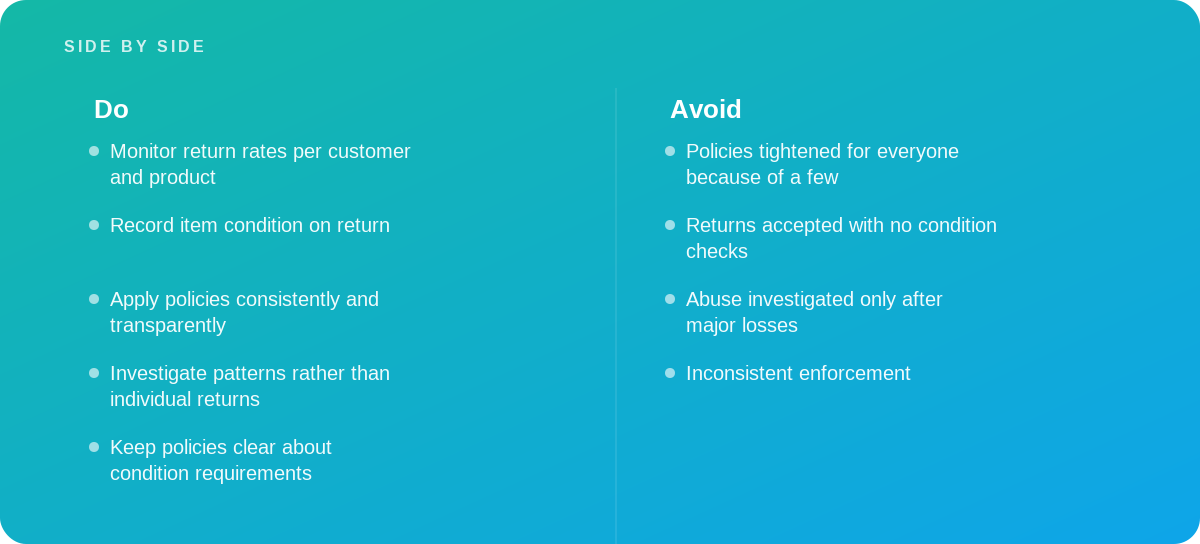
- Policies tightened for everyone because of a few
- Returns accepted with no condition checks
- Abuse investigated only after major losses
- Inconsistent enforcement
What good looks like instead
- Monitor return rates per customer and product
- Record item condition on return
- Apply policies consistently and transparently
- Investigate patterns rather than individual returns
- Keep policies clear about condition requirements
Why it matters
Generous returns drive sales, but unmanaged abuse erodes margin and disadvantages honest customers.
The specs that matter
| Measure | Figure |
|---|---|
| Patterns | abuse shows up in per-customer return rates |
| Wardrobing | items used then returned |
| Claims | false damage and non-delivery claims occur |
| Balance | strict policies also deter legitimate buyers |
Knowing when to hand it over
Tip: Bring in help when returns erode profitability.
Where this comes from
- Federal Trade Commission — Mail, Internet, or Telephone Order Merchandise Rule
- Stripe Documentation — Disputes
The figures and practices above come from the sources listed.
Working on something like this?
We take on E-commerce Development work for teams who want it done once, properly. Tell us what you are building and we will tell you honestly whether we are the right studio for it. Start a project.
Where to go next
Spotted something wrong? Report an error on this page. We correct on the page and say what changed.