Product Configurators and Custom Options: What Actually Works
Interfaces that let shoppers build a product from options such as size, material, engraving or components.
 MediaScaleUp Editorial Team

What is at stake
Configurators sell complex products, but option logic, pricing and stock quickly become complicated behind the scenes.
The playbook
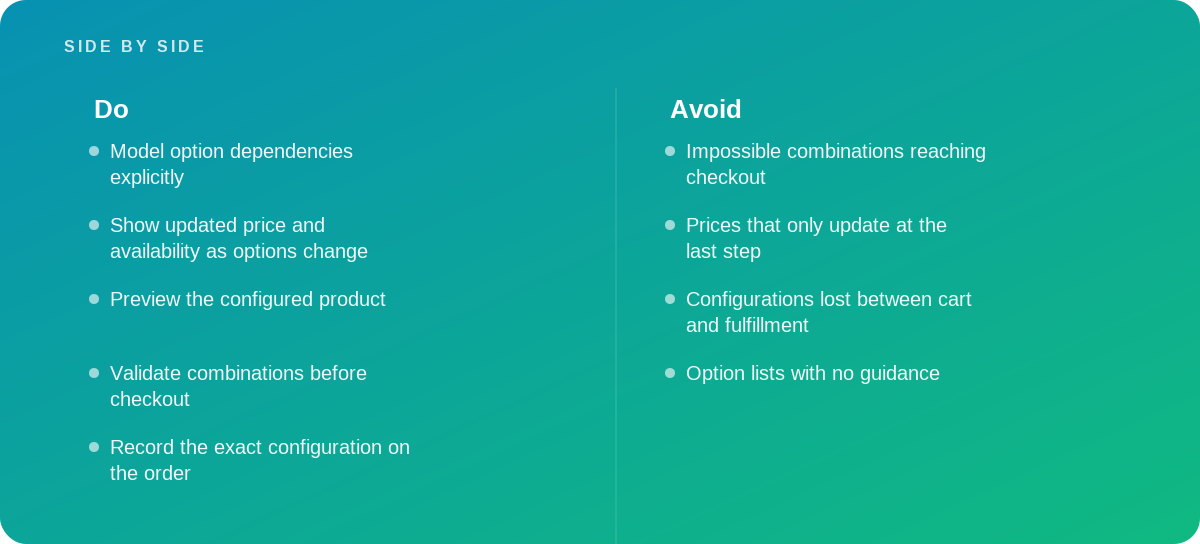
- Model option dependencies explicitly
- Show updated price and availability as options change
- Preview the configured product
- Validate combinations before checkout
- Record the exact configuration on the order
Where it goes wrong
Avoid:
- Impossible combinations reaching checkout
- Prices that only update at the last step
- Configurations lost between cart and fulfillment
- Option lists with no guidance
The numbers behind it
| Measure | Figure |
|---|---|
| Option rules | some combinations are impossible and must be blocked |
| Pricing | options can change price, weight and lead time |
| Inventory | configured products may consume several stock items |
| Previews | images or 3D views help buyers confirm choices |
Getting outside help
When to hand it over: Bring in help when custom products drive revenue.
Where this comes from
- Shopify Developers — Product variants
- Baymard Institute — Product page UX research
The figures and practices above come from the sources listed.
Working on something like this?
We take on E-commerce Development work for teams who want it done once, properly. Tell us what you are building and we will tell you honestly whether we are the right studio for it. Start a project.
Where to go next
Spotted something wrong? Report an error on this page. We correct on the page and say what changed.