Multi-Warehouse Inventory: What Actually Works
Running stock across several locations, including warehouses, stores and third-party fulfillment centers.
 MediaScaleUp Editorial Team

Where most projects go wrong
The usual mistakes:
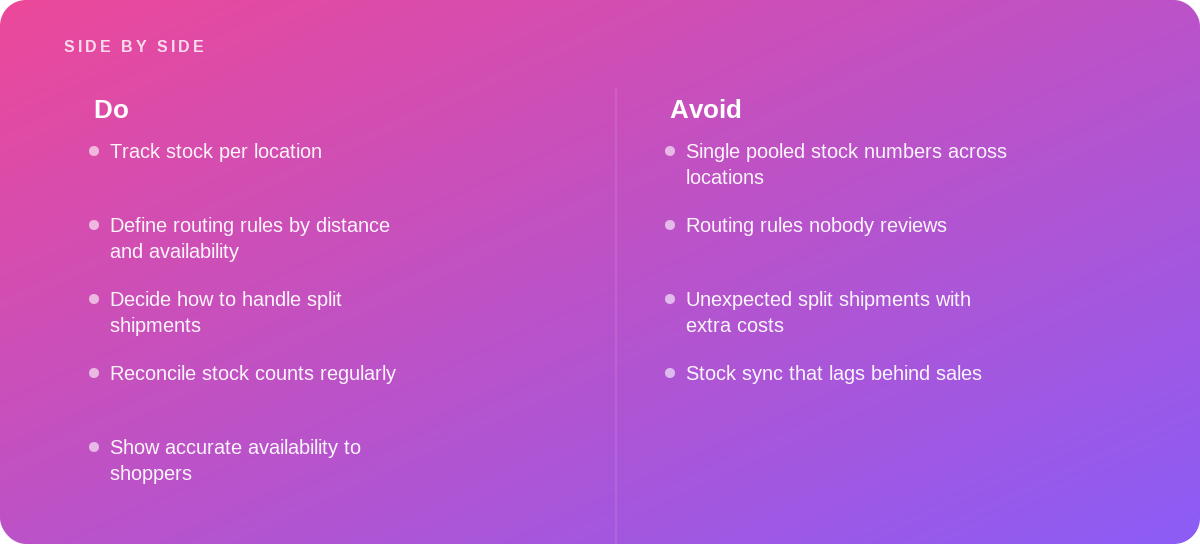
- Single pooled stock numbers across locations
- Routing rules nobody reviews
- Unexpected split shipments with extra costs
- Stock sync that lags behind sales
What good looks like instead
- Track stock per location
- Define routing rules by distance and availability
- Decide how to handle split shipments
- Reconcile stock counts regularly
- Show accurate availability to shoppers
Why it matters
Multiple locations shorten delivery times but make stock accuracy and order routing much harder.
The specs that matter
| Measure | Figure |
|---|---|
| Location-level stock | each location has its own availability |
| Order routing | rules decide which location fulfills an order |
| Split shipments | orders may ship from several locations |
| Sync | stock levels must stay current across channels |
Knowing when to hand it over
Tip: Bring in help when adding fulfillment locations.
Where this comes from
- Shopify Help Center — Locations
- Microsoft Learn — Inventory management
The figures and practices above come from the sources listed.
Working on something like this?
We take on E-commerce Development work for teams who want it done once, properly. Tell us what you are building and we will tell you honestly whether we are the right studio for it. Start a project.
Where to go next
Spotted something wrong? Report an error on this page. We correct on the page and say what changed.