How to Get Scoping 3D Projects Right
Defining what a 3D project includes, from asset counts and detail level to revisions and formats.
 MediaScaleUp Editorial Team

Where most projects go wrong
The usual mistakes:
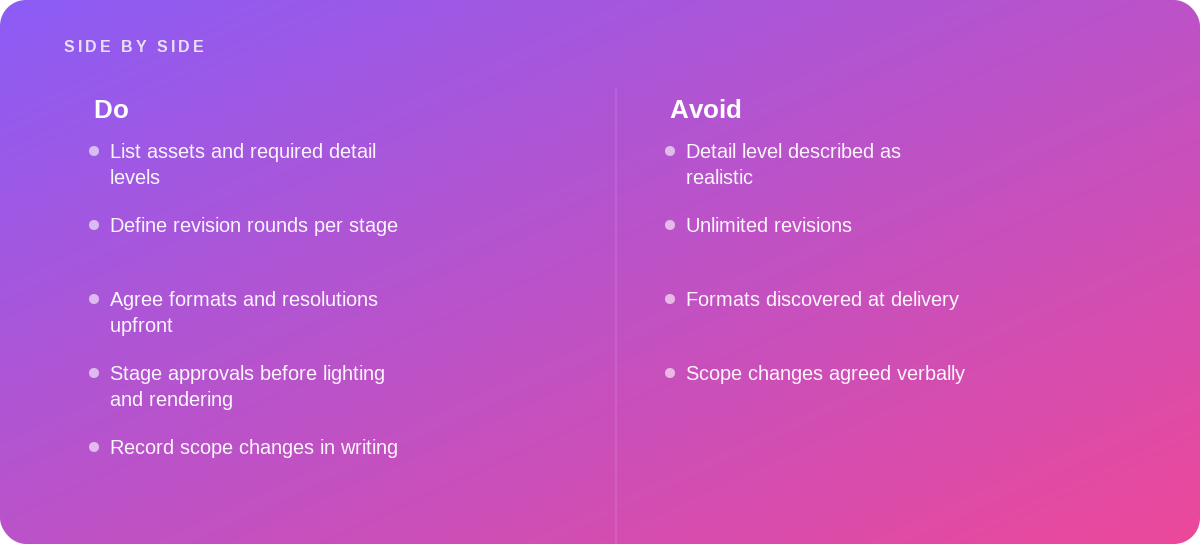
- Detail level described as realistic
- Unlimited revisions
- Formats discovered at delivery
- Scope changes agreed verbally
What good looks like instead
- List assets and required detail levels
- Define revision rounds per stage
- Agree formats and resolutions upfront
- Stage approvals before lighting and rendering
- Record scope changes in writing
Why it matters
3D work expands invisibly, and unscoped detail requests are the most common cause of overruns.
The specs that matter
| Measure | Figure |
|---|---|
| Detail level | drives modeling and texturing time |
| Asset counts | should be listed explicitly |
| Revisions | changes after lighting are expensive |
| Formats | each delivery format adds work |
Knowing when to hand it over
Tip: Bring in help when 3D projects overrun regularly.
Where this comes from
- Autodesk — Data exchange
- U.S. Small Business Administration — Write your business plan
The figures and practices above come from the sources listed.
Working on something like this?
We take on 3D Design & Development work for teams who want it done once, properly. Tell us what you are building and we will tell you honestly whether we are the right studio for it. Start a project.
Where to go next
Spotted something wrong? Report an error on this page. We correct on the page and say what changed.