How to Get Mix Bus Processing Right
Processing applied across a whole mix, such as gentle compression, equalization and saturation on the master bus.
 MediaScaleUp Editorial Team

Where most projects go wrong
The usual mistakes:
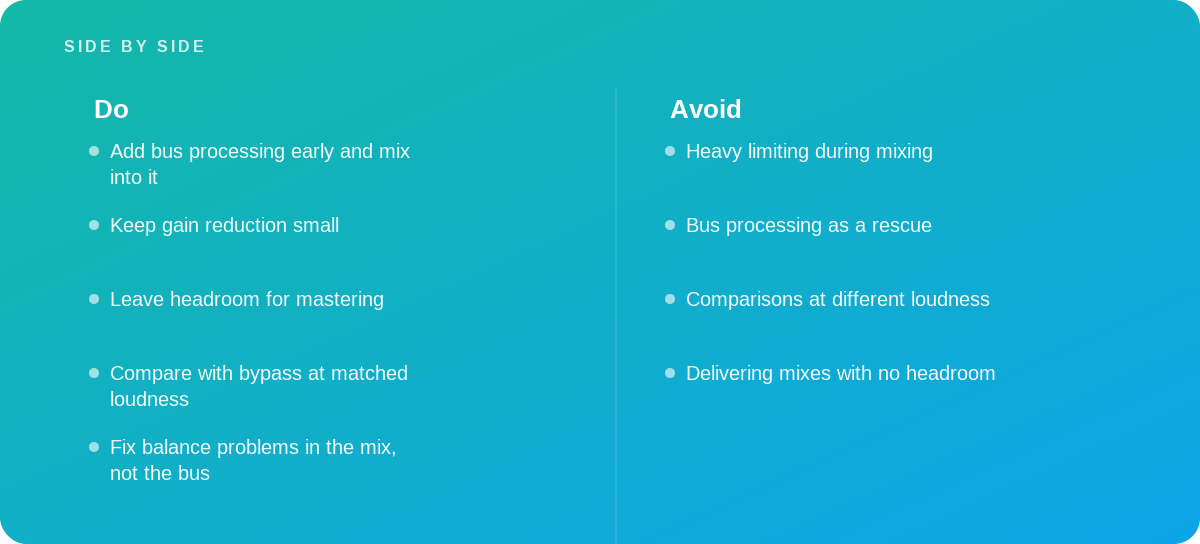
- Heavy limiting during mixing
- Bus processing as a rescue
- Comparisons at different loudness
- Delivering mixes with no headroom
What good looks like instead
- Add bus processing early and mix into it
- Keep gain reduction small
- Leave headroom for mastering
- Compare with bypass at matched loudness
- Fix balance problems in the mix, not the bus
Why it matters
Light bus processing can glue a mix together, but heavy processing late in the chain hides problems rather than fixing them.
The specs that matter
| Measure | Figure |
|---|---|
| Glue compression | small amounts of gain reduction across the mix |
| Order | processing order changes the result |
| Headroom | mixes need headroom before mastering |
| Level matching | comparisons must be made at matched loudness |
Knowing when to hand it over
Tip: Bring in help when mixes sound thin or squashed after mastering.
Where this comes from
- Audio Engineering Society — Dynamic range processing
- European Broadcasting Union — EBU R 128 loudness recommendation
The figures and practices above come from the sources listed.
Working on something like this?
We take on Audio Editing & Production work for teams who want it done once, properly. Tell us what you are building and we will tell you honestly whether we are the right studio for it. Start a project.
Where to go next
Spotted something wrong? Report an error on this page. We correct on the page and say what changed.