Front-Loading and the Inverted Pyramid: What Actually Works
Writing with the most important information first, then supporting details, a structure borrowed from journalism.
 MediaScaleUp Editorial Team

Where most projects go wrong
The usual mistakes:
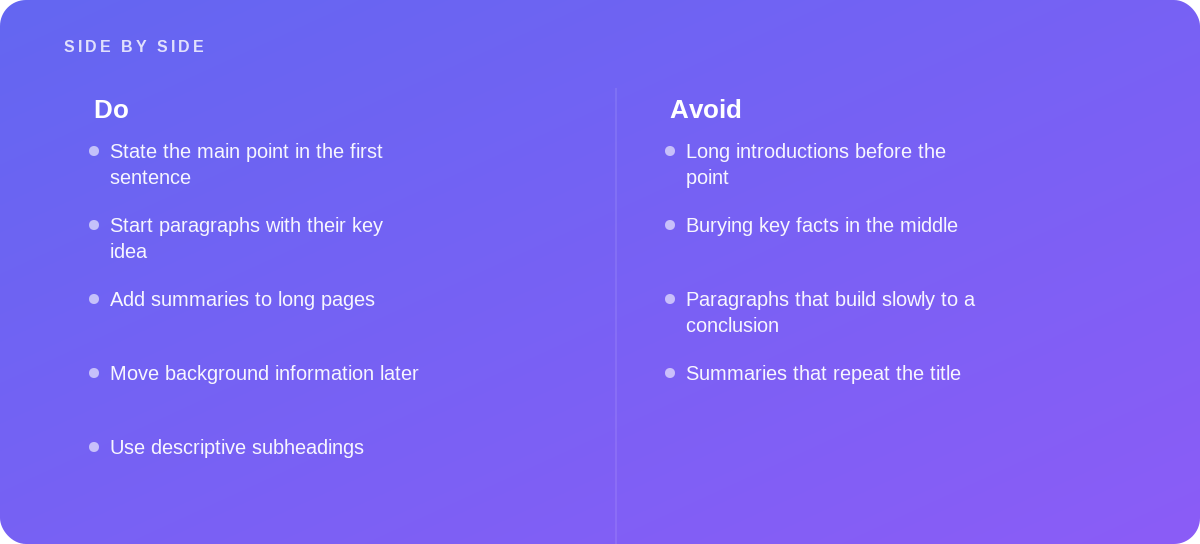
- Long introductions before the point
- Burying key facts in the middle
- Paragraphs that build slowly to a conclusion
- Summaries that repeat the title
What good looks like instead
- State the main point in the first sentence
- Start paragraphs with their key idea
- Add summaries to long pages
- Move background information later
- Use descriptive subheadings
Why it matters
Online readers scan and leave quickly, so putting conclusions first means more people get the essential message.
The specs that matter
| Measure | Figure |
|---|---|
| Inverted pyramid | conclusion first, then key details, then background |
| Scanning | people read the beginnings of paragraphs and lines more than the ends |
| Summaries | a short summary at the top helps readers decide whether to continue |
| Accessibility | clear structure helps people with cognitive disabilities |
Knowing when to hand it over
Tip: Bring in help when rewriting long or complex content for the web.
Where this comes from
- Nielsen Norman Group — Inverted pyramid: writing for comprehension
- PlainLanguage.gov — Federal Plain Language Guidelines
The figures and practices above come from the sources listed.
Working on something like this?
We take on Content Strategy work for teams who want it done once, properly. Tell us what you are building and we will tell you honestly whether we are the right studio for it. Start a project.
Where to go next
Spotted something wrong? Report an error on this page. We correct on the page and say what changed.