Fraud Prevention, Done Properly
Reducing fraudulent orders without rejecting legitimate customers.
 MediaScaleUp Editorial Team

Where most projects go wrong
The usual mistakes:
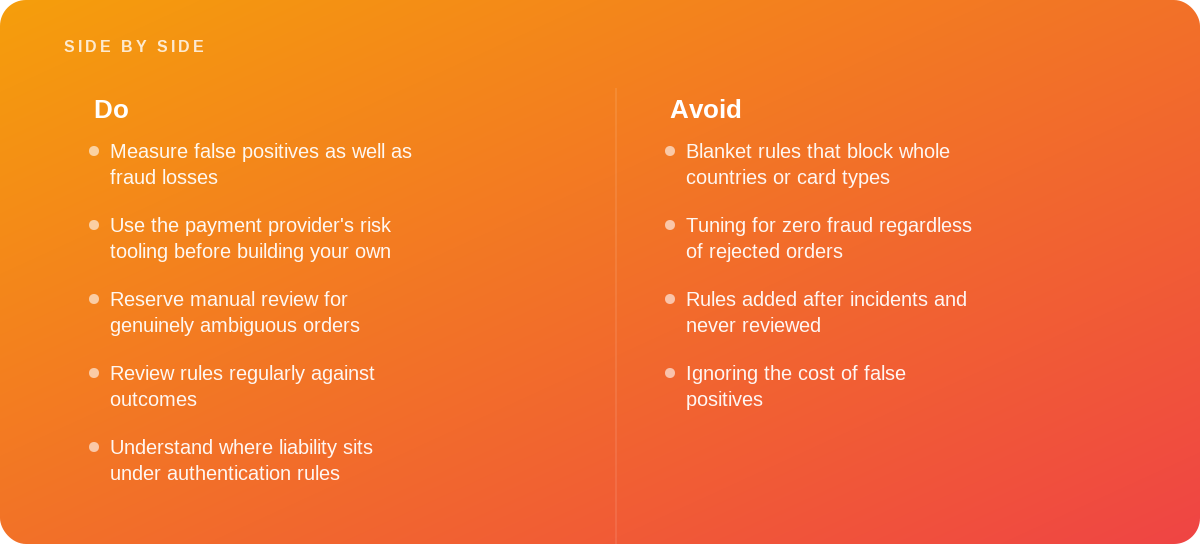
- Blanket rules that block whole countries or card types
- Tuning for zero fraud regardless of rejected orders
- Rules added after incidents and never reviewed
- Ignoring the cost of false positives
What good looks like instead
- Measure false positives as well as fraud losses
- Use the payment provider's risk tooling before building your own
- Reserve manual review for genuinely ambiguous orders
- Review rules regularly against outcomes
- Understand where liability sits under authentication rules
Why it matters
Fraud controls are a trade-off: every rule that blocks a fraudster also blocks some genuine customers, and the second cost is invisible.
The specs that matter
| Measure | Figure |
|---|---|
| Chargebacks | the direct cost of card fraud to a merchant |
| False positives | legitimate orders rejected, and rarely measured |
| Strong customer authentication | shifts some liability in the UK and EU |
| Risk scoring | provided by most payment platforms |
| Manual review | appropriate for a narrow band of orders |
Knowing when to hand it over
Tip: Bring in help when chargebacks are rising, when legitimate customers are being blocked, or when fraud rules have accumulated without review.
Where this comes from
- Stripe Documentation — Fraud prevention and Radar
- PCI Security Standards Council — Security guidance
- European Commission — Payment services regulation
The figures and practices above come from the sources listed.
Working on something like this?
We take on E-commerce Development work for teams who want it done once, properly. Tell us what you are building and we will tell you honestly whether we are the right studio for it. Start a project.
Where to go next
Spotted something wrong? Report an error on this page. We correct on the page and say what changed.