Design Systems as Brand Infrastructure: What Actually Works
Treating the design system as the mechanism through which brand decisions actually reach products.
 MediaScaleUp Editorial Team

At a glance
- Mechanism tokens and components carry brand decisions into code
- Rebrand cost far lower when the brand is tokenised
- Ownership brand and product teams both have a stake
- Drift prevention the system is the enforcement, not the guidelines
- Limitation a system cannot enforce what it does not cover
Why it matters
Why it matters: A brand that lives in a PDF reaches products through interpretation; a brand that lives in tokens and components reaches them directly.
Best practice
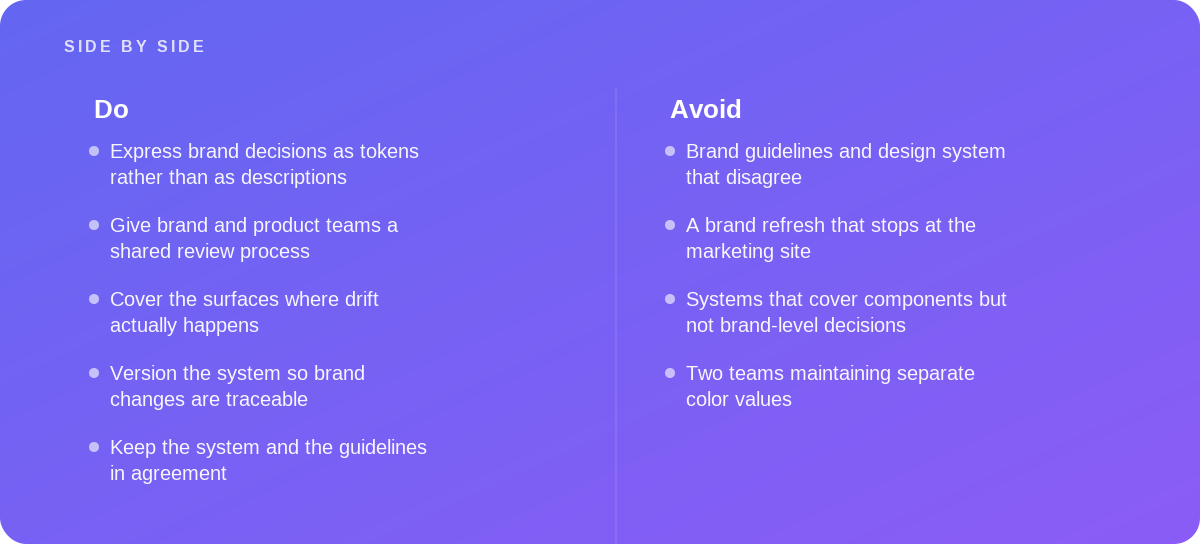
- Express brand decisions as tokens rather than as descriptions
- Give brand and product teams a shared review process
- Cover the surfaces where drift actually happens
- Version the system so brand changes are traceable
- Keep the system and the guidelines in agreement
Common pitfalls
Watch out for:
- Brand guidelines and design system that disagree
- A brand refresh that stops at the marketing site
- Systems that cover components but not brand-level decisions
- Two teams maintaining separate color values
When to call in a specialist
Bottom line Bring in help when brand and product have diverged visually, when a rebrand must reach a product, or when guidelines and system contradict each other.
Where this comes from
- Material Design — Design system and theming
- GOV.UK Design System — System governance
- Figma Help Center — Libraries and variables
The figures and practices above come from the sources listed.
Working on something like this?
We take on Brand & Identity Design work for teams who want it done once, properly. Tell us what you are building and we will tell you honestly whether we are the right studio for it. Start a project.
Where to go next
Spotted something wrong? Report an error on this page. We correct on the page and say what changed.