Chargebacks and Payment Disputes, Done Properly
When a cardholder asks their bank to reverse a charge, and the process merchants use to respond with evidence or accept the loss.
 MediaScaleUp Editorial Team

At a glance
- Process the cardholder disputes, the merchant responds with evidence, and the bank decides
- Common reasons fraud, product not received and product not as described
- Fees providers usually charge a dispute fee
- Monitoring programs card networks monitor merchants with high dispute rates
Why it matters
Why it matters: Chargebacks cost the transaction plus fees, and high dispute rates can lead payment providers to restrict or close accounts.
Best practice
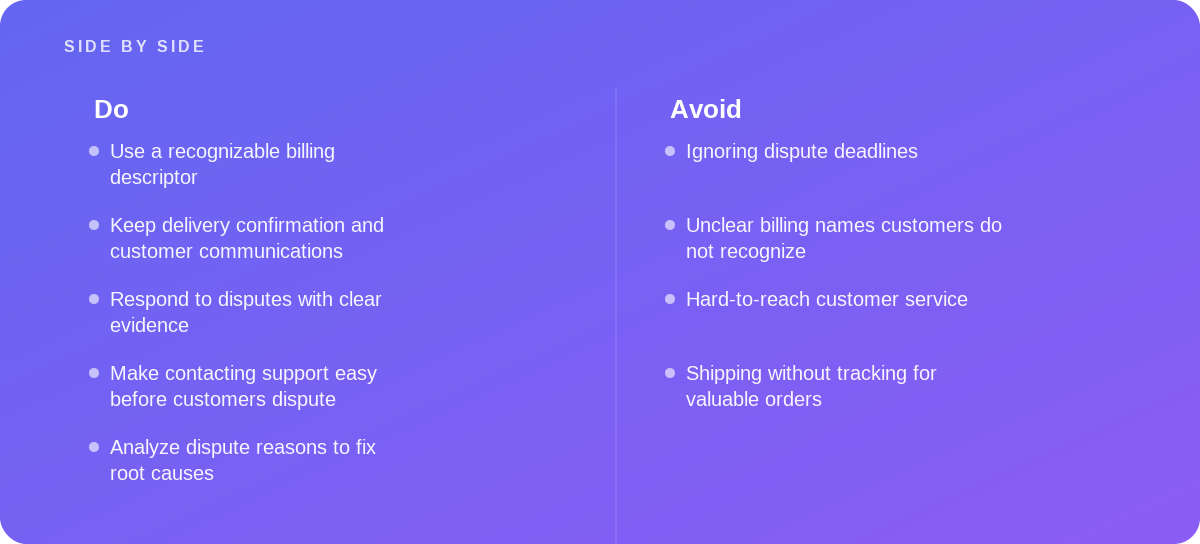
- Use a recognizable billing descriptor
- Keep delivery confirmation and customer communications
- Respond to disputes with clear evidence
- Make contacting support easy before customers dispute
- Analyze dispute reasons to fix root causes
Common pitfalls
Watch out for:
- Ignoring dispute deadlines
- Unclear billing names customers do not recognize
- Hard-to-reach customer service
- Shipping without tracking for valuable orders
When to call in a specialist
Bottom line Bring in help when dispute rates rise, or when a payment provider warns about your account.
Where this comes from
- Stripe Documentation — Disputes and fraud
- Consumer Financial Protection Bureau — Credit card disputes
The figures and practices above come from the sources listed.
Working on something like this?
We take on E-commerce Development work for teams who want it done once, properly. Tell us what you are building and we will tell you honestly whether we are the right studio for it. Start a project.
Where to go next
Spotted something wrong? Report an error on this page. We correct on the page and say what changed.