Brand Licensing Agreements, Done Properly
Contracts that let another business use your brand on their products or services.
 MediaScaleUp Editorial Team
Why does it matter?
Licensing extends a brand into new categories, but trademark owners must control quality or risk losing rights.
What are the numbers?
- Quality control trademark licensors are expected to control the quality of licensed goods
- Naked licensing licensing without control can jeopardize trademark rights
- Scope agreements define categories, territories and terms
- Approval licensors typically approve artwork and products
What should I do?
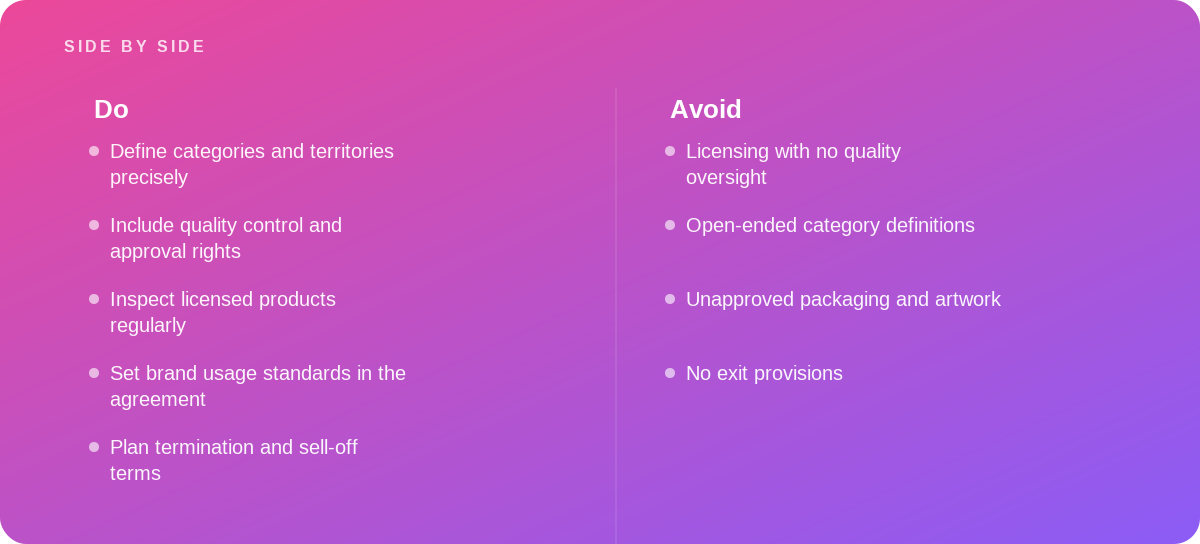
- Define categories and territories precisely
- Include quality control and approval rights
- Inspect licensed products regularly
- Set brand usage standards in the agreement
- Plan termination and sell-off terms
What should I avoid?
Avoid:
- Licensing with no quality oversight
- Open-ended category definitions
- Unapproved packaging and artwork
- No exit provisions
When should I get help?
Short answer Bring in help before licensing a brand to third parties.
Where this comes from
- United States Patent and Trademark Office — Trademark basics
- World Intellectual Property Organization — Trademarks
The figures and practices above come from the sources listed.
Working on something like this?
We take on Brand & Identity Design work for teams who want it done once, properly. Tell us what you are building and we will tell you honestly whether we are the right studio for it. Start a project.
Where to go next
Spotted something wrong? Report an error on this page. We correct on the page and say what changed.