A Practical Guide to VPAT and Accessibility Conformance Reports
An Accessibility Conformance Report documents how a product meets accessibility standards, and the VPAT is the widely used template for writing one.
 MediaScaleUp Editorial Team

Why does it matter?
Government and large corporate buyers often require an ACR before purchase, and an inaccurate report can create legal and contractual risk.
What are the numbers?
- VPAT Voluntary Product Accessibility Template
- Editions cover Section 508, EN 301 549, WCAG, or all three in an international edition
- Conformance levels used supports, partially supports, does not support and not applicable
- Evidence reports should be based on actual testing
What should I do?
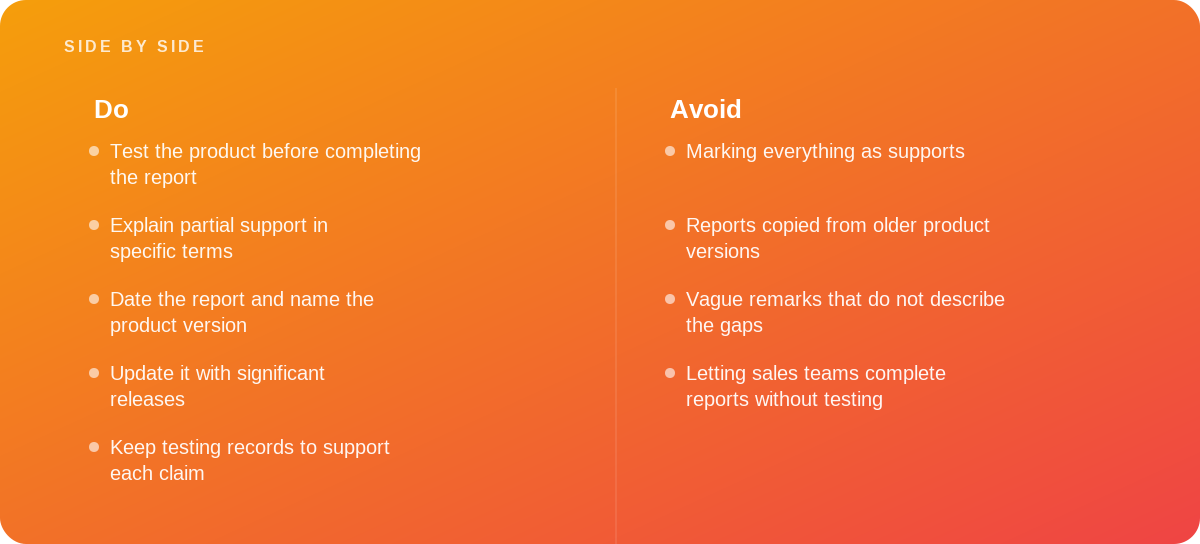
- Test the product before completing the report
- Explain partial support in specific terms
- Date the report and name the product version
- Update it with significant releases
- Keep testing records to support each claim
What should I avoid?
Avoid:
- Marking everything as supports
- Reports copied from older product versions
- Vague remarks that do not describe the gaps
- Letting sales teams complete reports without testing
When should I get help?
Short answer Bring in help when a buyer requests an ACR, when your last report is out of date, or when you need an independent audit.
Where this comes from
- Section508.gov — Accessibility Conformance Reports
- W3C Web Accessibility Initiative — Evaluating web accessibility overview
The figures and practices above come from the sources listed.
Working on something like this?
We take on Performance & Accessibility work for teams who want it done once, properly. Tell us what you are building and we will tell you honestly whether we are the right studio for it. Start a project.
Where to go next
Spotted something wrong? Report an error on this page. We correct on the page and say what changed.