A Practical Guide to Vocal Comping
Building one best vocal performance from several takes, choosing the strongest phrases and joining them seamlessly.
 MediaScaleUp Editorial Team

Why does it matter?
Comping gets the best performance without asking a singer or narrator to deliver perfect takes, but careless joins sound stitched together.
What are the numbers?
- Takes multiple recordings of the same part
- Pro Tools manages alternate takes with playlists
- Cubase organizes takes in lanes
- Crossfades hide the joins between chosen phrases
What should I do?
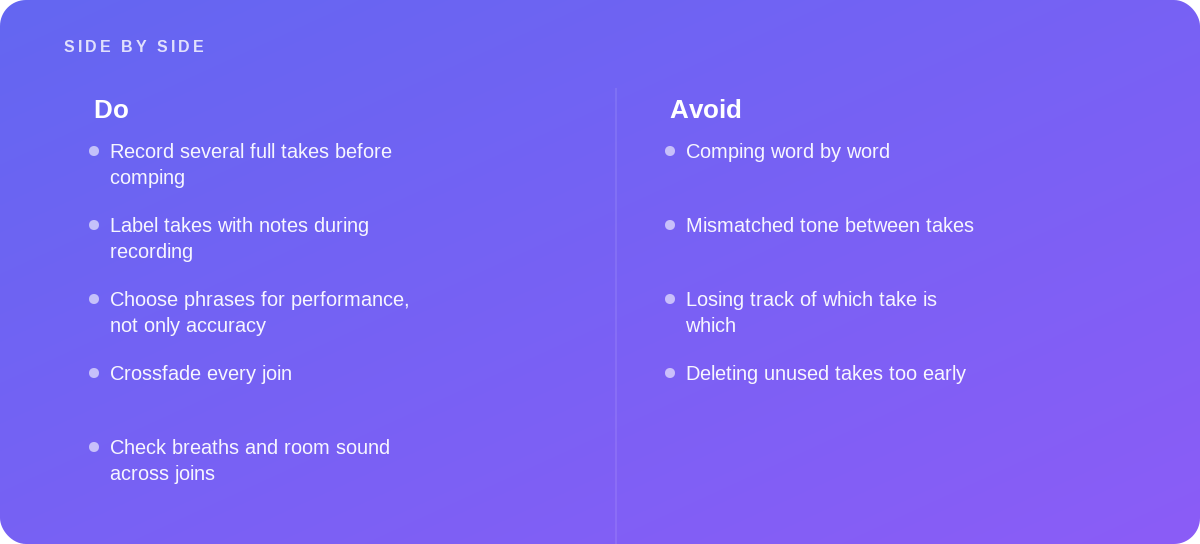
- Record several full takes before comping
- Label takes with notes during recording
- Choose phrases for performance, not only accuracy
- Crossfade every join
- Check breaths and room sound across joins
What should I avoid?
Avoid:
- Comping word by word
- Mismatched tone between takes
- Losing track of which take is which
- Deleting unused takes too early
When should I get help?
Short answer Bring in help when sessions have many takes and tight deadlines.
Where this comes from
The figures and practices above come from the sources listed.
Working on something like this?
We take on Audio Editing & Production work for teams who want it done once, properly. Tell us what you are building and we will tell you honestly whether we are the right studio for it. Start a project.
Where to go next
Spotted something wrong? Report an error on this page. We correct on the page and say what changed.