A Practical Guide to Staging Environments
A copy of production used to test changes before release, ideally with similar data and configuration.
 MediaScaleUp Editorial Team

Where most projects go wrong
The usual mistakes:
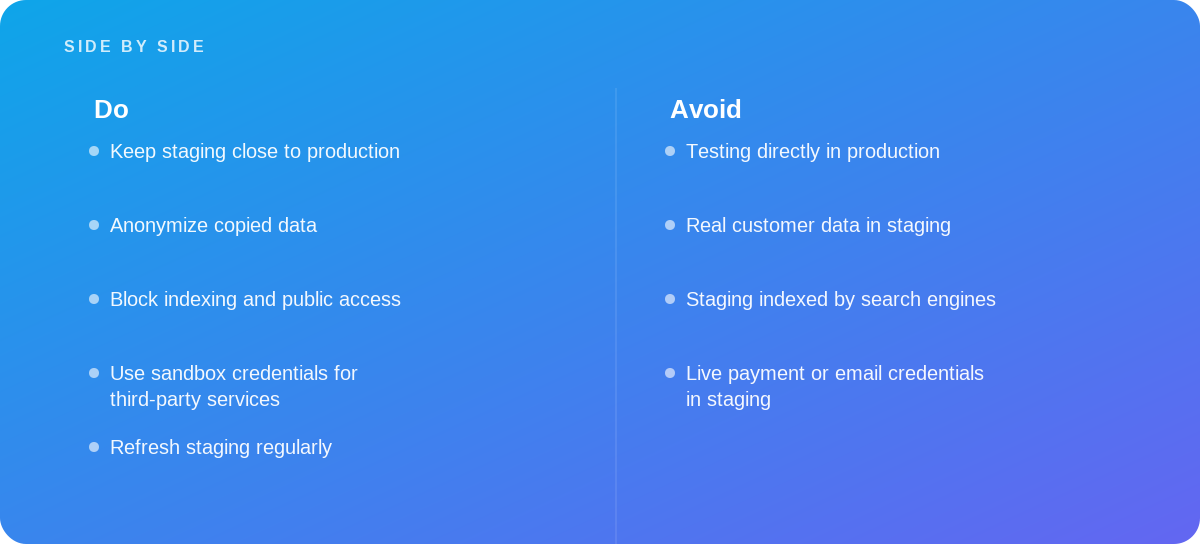
- Testing directly in production
- Real customer data in staging
- Staging indexed by search engines
- Live payment or email credentials in staging
What good looks like instead
- Keep staging close to production
- Anonymize copied data
- Block indexing and public access
- Use sandbox credentials for third-party services
- Refresh staging regularly
Why it matters
Testing only locally hides environment-specific bugs, while a realistic staging site catches them before customers do.
The specs that matter
| Measure | Figure |
|---|---|
| Parity | staging should match production configuration closely |
| Data | production data copies need anonymization |
| Access | staging should be blocked from search engines |
| Third parties | payment and email services need test modes |
Knowing when to hand it over
Tip: Bring in help when releases regularly break in production.
Where this comes from
- Google Search Central — Robots meta tag specifications
- Microsoft Learn — Deployment environments
The figures and practices above come from the sources listed.
Working on something like this?
We take on Web Design & Development work for teams who want it done once, properly. Tell us what you are building and we will tell you honestly whether we are the right studio for it. Start a project.
Where to go next
Spotted something wrong? Report an error on this page. We correct on the page and say what changed.





