A Practical Guide to Marketing Automation
Triggered sequences that respond to what a person does rather than to a calendar.
 MediaScaleUp Editorial Team
At a glance
- Triggers behavior, dates or attribute changes
- Exit conditions stop a sequence when it is no longer relevant
- Overlap a person can enter several sequences at once
- Frequency capping limits total contact across sequences
- Review automations decay as the product and audience change
Why it matters
Why it matters: Automation is leverage in both directions: a good sequence runs indefinitely without attention, and so does a broken one.
Best practice
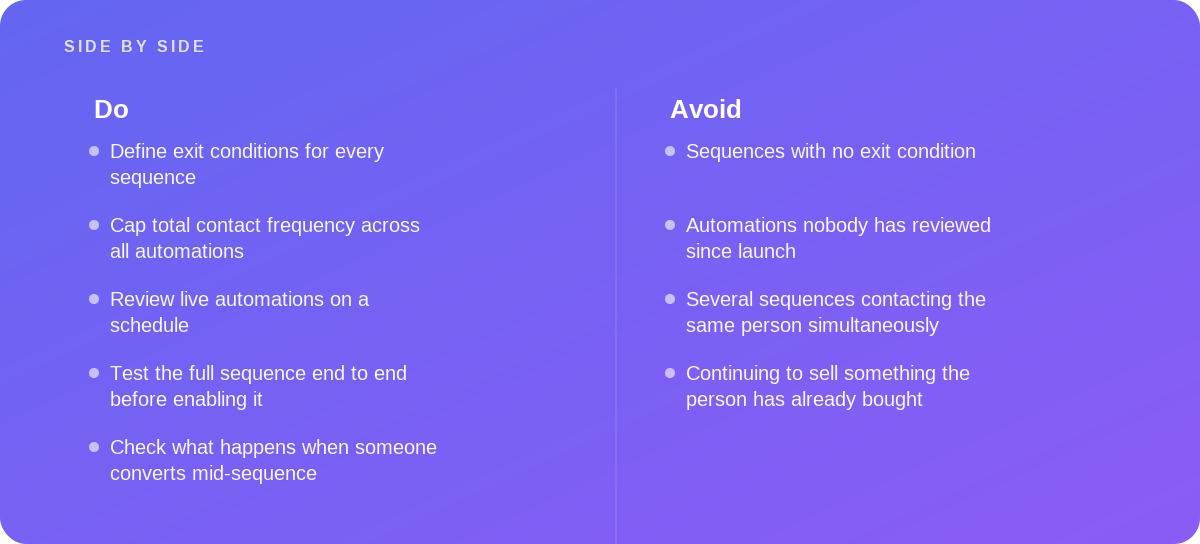
- Define exit conditions for every sequence
- Cap total contact frequency across all automations
- Review live automations on a schedule
- Test the full sequence end to end before enabling it
- Check what happens when someone converts mid-sequence
Common pitfalls
Watch out for:
- Sequences with no exit condition
- Automations nobody has reviewed since launch
- Several sequences contacting the same person simultaneously
- Continuing to sell something the person has already bought
When to call in a specialist
Bottom line Bring in help when automations have accumulated without review, when customers report irrelevant messaging, or when several systems are sending independently.
Where this comes from
- Mailchimp — Automation documentation
- Information Commissioner's Office — Marketing consent
- Nielsen Norman Group — Personalization research
The figures and practices above come from the sources listed.
Working on something like this?
We take on Digital Marketing & CRO work for teams who want it done once, properly. Tell us what you are building and we will tell you honestly whether we are the right studio for it. Start a project.
Where to go next
Spotted something wrong? Report an error on this page. We correct on the page and say what changed.