A Practical Guide to CCPA and CPRA for Marketers
California's consumer privacy law, as amended by the California Privacy Rights Act, and what it means for tracking, targeted advertising and customer data.
 MediaScaleUp Editorial Team

At a glance
- Enforcement the California Privacy Protection Agency and the Attorney General
- Consumer rights to know, delete, correct and opt out of sale or sharing
- Sharing includes disclosing data for cross-context behavioral advertising
- Opt-out link businesses must offer a Do Not Sell or Share My Personal Information link or alternative
Why it matters
Why it matters: It gives California residents rights over their data, including opting out of sale and sharing for cross-context behavioral advertising, which affects most ad tracking.
Best practice
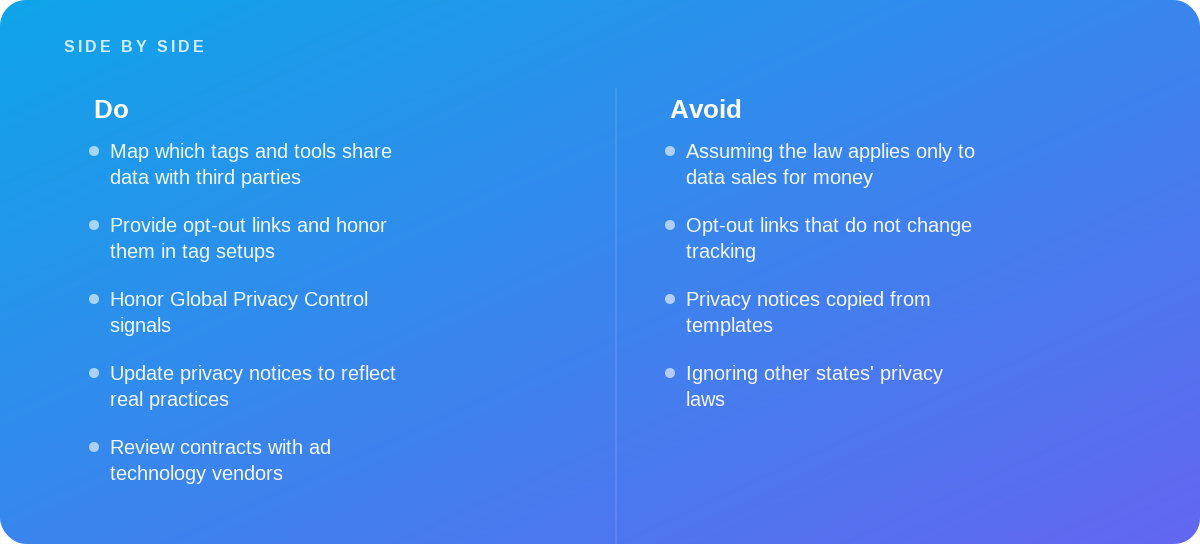
- Map which tags and tools share data with third parties
- Provide opt-out links and honor them in tag setups
- Honor Global Privacy Control signals
- Update privacy notices to reflect real practices
- Review contracts with ad technology vendors
Common pitfalls
Watch out for:
- Assuming the law applies only to data sales for money
- Opt-out links that do not change tracking
- Privacy notices copied from templates
- Ignoring other states' privacy laws
When to call in a specialist
Bottom line Bring in help when you run targeted advertising to California residents, or when a privacy audit or complaint arises.
Where this comes from
- California Privacy Protection Agency — California Consumer Privacy Act
- California Attorney General — California Consumer Privacy Act
The figures and practices above come from the sources listed.
Working on something like this?
We take on Digital Marketing & CRO work for teams who want it done once, properly. Tell us what you are building and we will tell you honestly whether we are the right studio for it. Start a project.
Where to go next
Spotted something wrong? Report an error on this page. We correct on the page and say what changed.