Third-Party Cookies and Browser Changes: The Decisions That Matter
The state of cross-site tracking in browsers, and what it means for advertising and measurement.
 Samir Haddad

Where most projects go wrong
The usual mistakes:
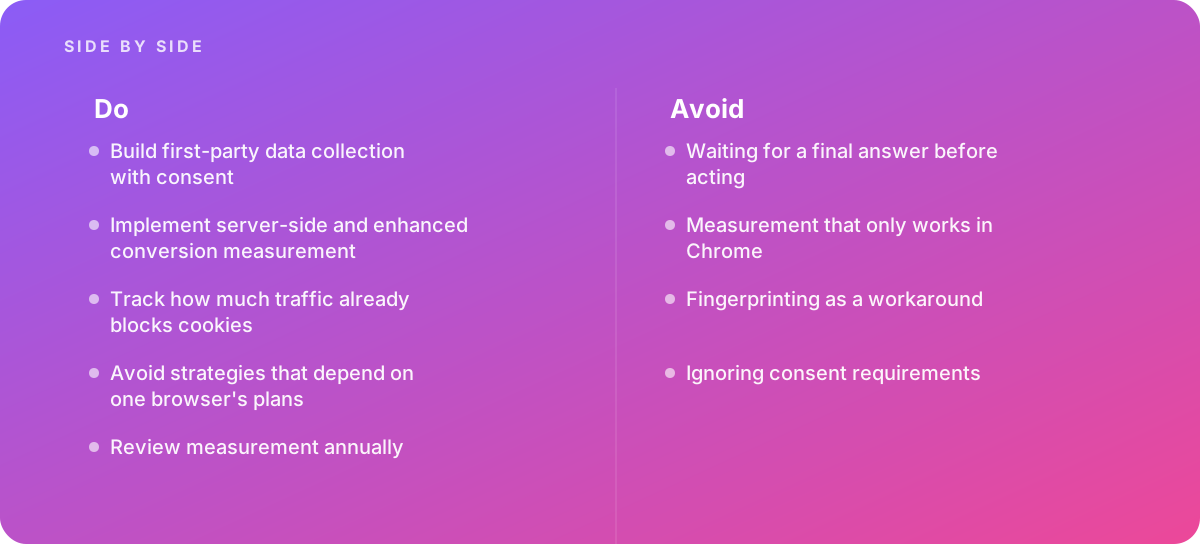
- Waiting for a final answer before acting
- Measurement that only works in Chrome
- Fingerprinting as a workaround
- Ignoring consent requirements
What good looks like instead
- Build first-party data collection with consent
- Implement server-side and enhanced conversion measurement
- Track how much traffic already blocks cookies
- Avoid strategies that depend on one browser's plans
- Review measurement annually
Why it matters
Plans have changed repeatedly, so strategy should rest on first-party data rather than predictions about cookies.
The specs that matter
| Measure | Figure |
|---|---|
| Safari and Firefox | block third-party cookies by default |
| Chrome | has changed its plans for third-party cookies several times |
| First-party data | remains usable regardless of third-party changes |
| Measurement | platforms use modeling to fill measurement gaps |
Knowing when to hand it over
Tip: Bring in help when measurement depends on third-party tracking.
Where this comes from
- Chrome for Developers — Privacy Sandbox
- Google Analytics Help — Consent mode
The figures and practices above come from the sources listed.
Working on something like this?
We take on Digital Marketing & CRO work for teams who want it done once, properly. Tell us what you are building and we will tell you honestly whether we are the right studio for it. Start a project.
Where to go next
Spotted something wrong? Report an error on this page. We correct on the page and say what changed.