A Practical Guide to Global Privacy Control
A browser signal that tells websites a visitor wants to opt out of the sale or sharing of their personal information.
 MediaScaleUp Editorial Team

What is at stake
California requires businesses covered by its privacy law to treat the signal as a valid opt-out request, so tag setups must respond to it.
The playbook
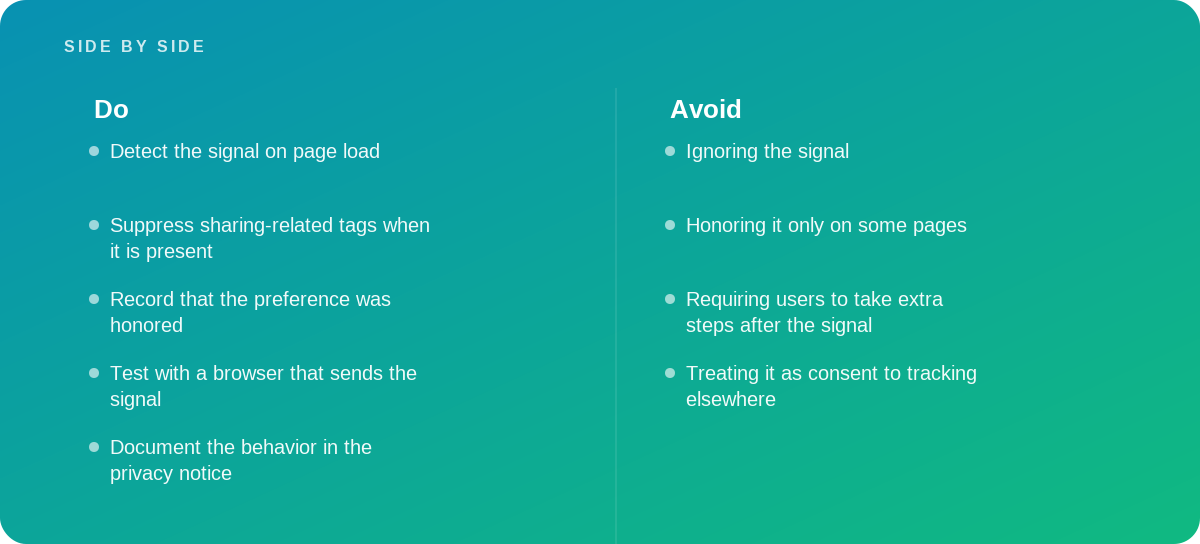
- Detect the signal on page load
- Suppress sharing-related tags when it is present
- Record that the preference was honored
- Test with a browser that sends the signal
- Document the behavior in the privacy notice
Where it goes wrong
Avoid:
- Ignoring the signal
- Honoring it only on some pages
- Requiring users to take extra steps after the signal
- Treating it as consent to tracking elsewhere
The numbers behind it
| Measure | Figure |
|---|---|
| What it is | a signal sent by supporting browsers and extensions |
| California requirement | covered businesses must honor it as an opt-out of sale or sharing |
| Enforcement | California's Attorney General has taken action over failures to honor it |
| Implementation | sites detect the signal and adjust tracking |
Getting outside help
When to hand it over: Bring in help when configuring consent management for US privacy laws.
Where this comes from
- California Privacy Protection Agency — Global Privacy Control
- California Attorney General — California Consumer Privacy Act
The figures and practices above come from the sources listed.
Working on something like this?
We take on Digital Marketing & CRO work for teams who want it done once, properly. Tell us what you are building and we will tell you honestly whether we are the right studio for it. Start a project.
Where to go next
Spotted something wrong? Report an error on this page. We correct on the page and say what changed.