A Practical Guide to Blocking Scrapers
Limiting automated collection of content, prices and data from a website.
 MediaScaleUp Editorial Team

What is at stake
Scraping costs bandwidth and can feed competitors, but blunt blocking also stops search engines and legitimate tools.
The playbook
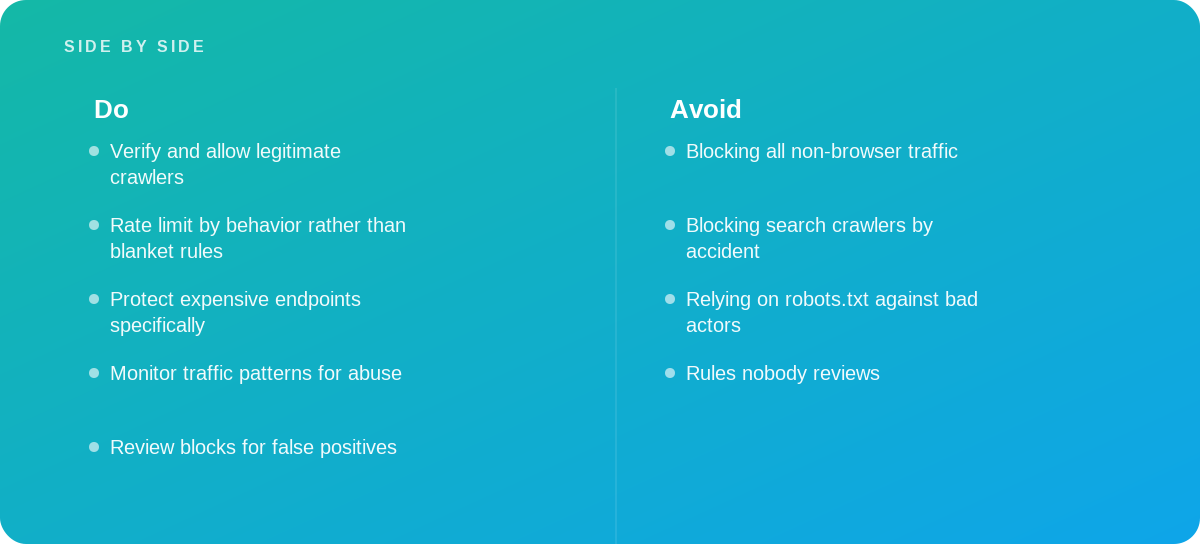
- Verify and allow legitimate crawlers
- Rate limit by behavior rather than blanket rules
- Protect expensive endpoints specifically
- Monitor traffic patterns for abuse
- Review blocks for false positives
Where it goes wrong
Avoid:
- Blocking all non-browser traffic
- Blocking search crawlers by accident
- Relying on robots.txt against bad actors
- Rules nobody reviews
The numbers behind it
| Measure | Figure |
|---|---|
| Identification | crawlers can be verified by reverse lookup |
| Rate limiting | slows aggressive collection |
| robots.txt | relies on voluntary compliance |
| Legitimate bots | search and accessibility tools must keep access |
Getting outside help
When to hand it over: Bring in help when scraping affects performance or pricing.
Where this comes from
- Google Search Central — Verifying Googlebot
- OWASP — Automated Threats to Web Applications
The figures and practices above come from the sources listed.
Working on something like this?
We take on Web Design & Development work for teams who want it done once, properly. Tell us what you are building and we will tell you honestly whether we are the right studio for it. Start a project.
Where to go next
Spotted something wrong? Report an error on this page. We correct on the page and say what changed.







