A Practical Guide to Balanced and Unbalanced Audio
The two ways audio signals travel down cables, and why balanced connections resist noise.
 Tomas Lindqvist

At a glance
- Balanced lines carry the signal twice, in opposite polarity, and cancel noise at the input
- Connectors XLR and TRS connections are usually balanced
- Unbalanced connections use two conductors and pick up more noise over distance
- Adapters converting formats incorrectly can cause level and noise problems
Why it matters
Why it matters: Unbalanced cables pick up hum and interference over distance, which explains many mysterious studio noises.
Best practice
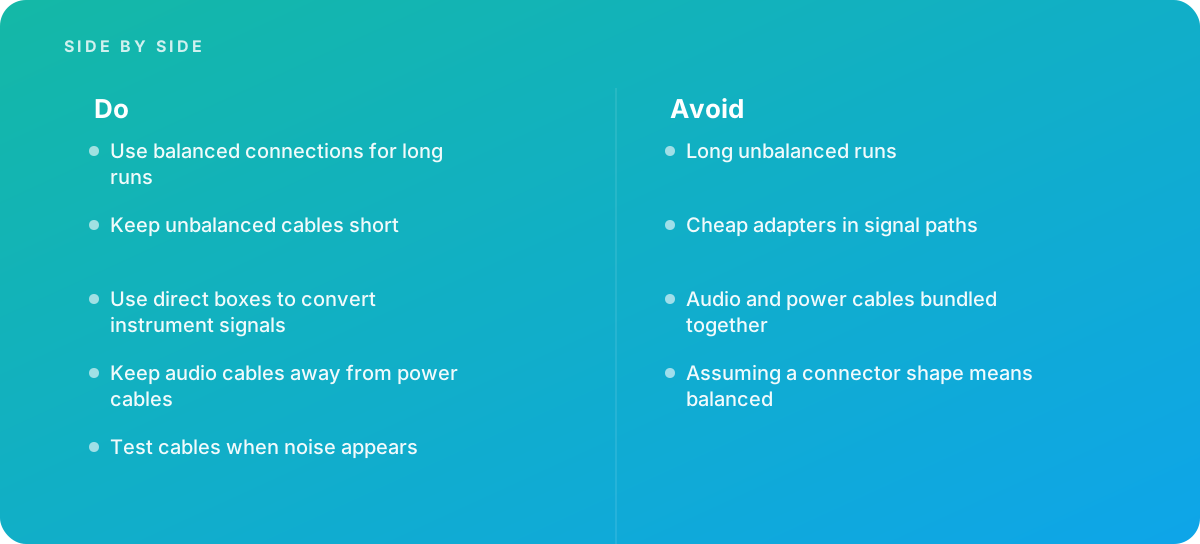
- Use balanced connections for long runs
- Keep unbalanced cables short
- Use direct boxes to convert instrument signals
- Keep audio cables away from power cables
- Test cables when noise appears
Common pitfalls
Watch out for:
- Long unbalanced runs
- Cheap adapters in signal paths
- Audio and power cables bundled together
- Assuming a connector shape means balanced
When to call in a specialist
Bottom line Bring in help when installations pick up noise.
Where this comes from
- Audio Engineering Society — Educational resources
- European Broadcasting Union — Technical recommendations for production
The figures and practices above come from the sources listed.
Working on something like this?
We take on Audio Editing & Production work for teams who want it done once, properly. Tell us what you are building and we will tell you honestly whether we are the right studio for it. Start a project.
Where to go next
Spotted something wrong? Report an error on this page. We correct on the page and say what changed.