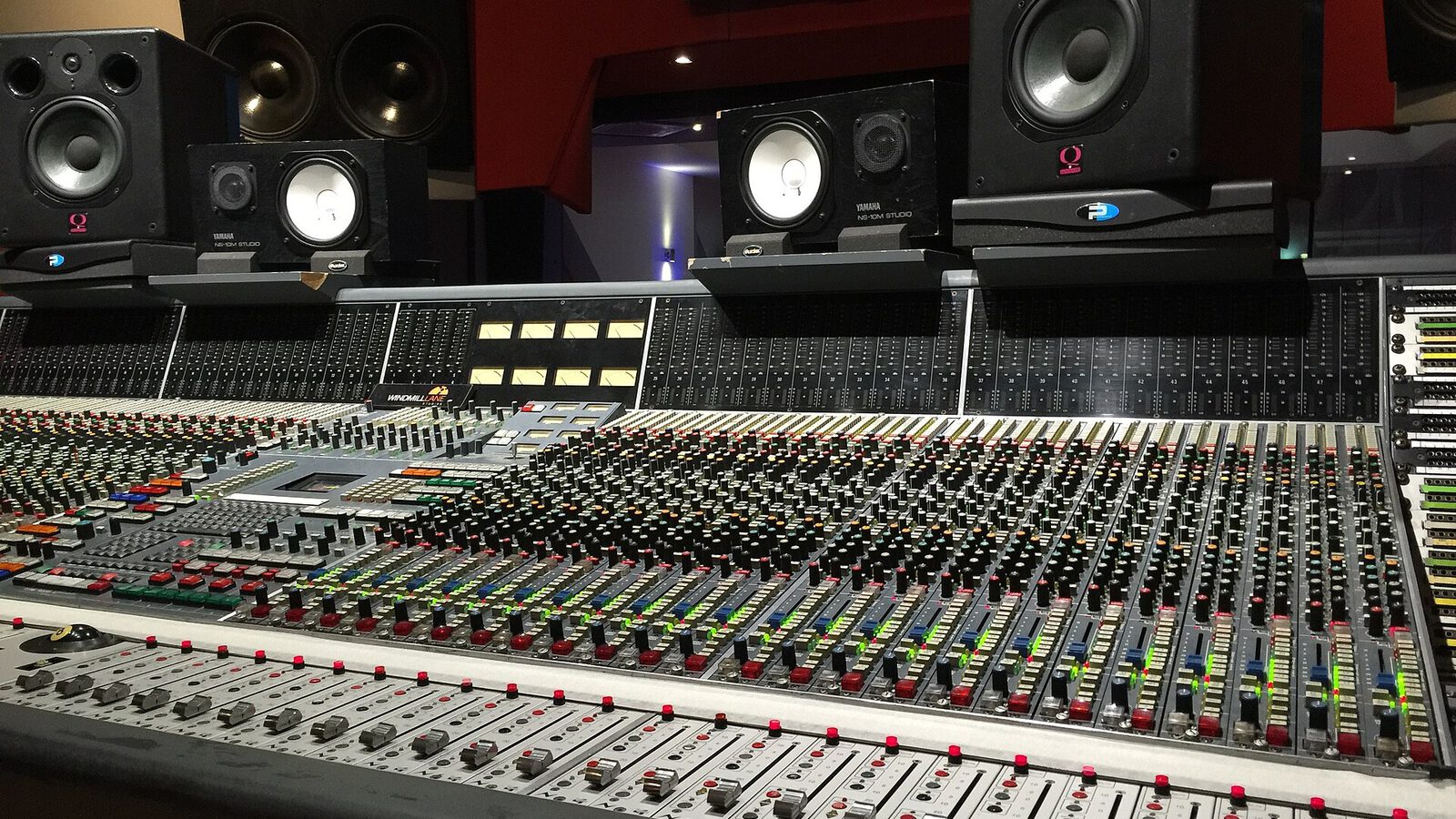
Audio Editing & Production for Financial Services and Fintech
How audio editing and production for banks, advisers and fintech runs phase by phase, from compliance-ready scripts to sign-off, archiving and pricing.
Last revised
Audio editing & production for financial services covers the podcasts, webinars, explainer voiceovers and educational audio that banks, credit unions, wealth managers, insurers and fintech companies publish to explain what they do. The editing craft is the same as anywhere else: clean dialogue, consistent loudness, tight pacing, a sound that holds attention. What changes is the setting. In this industry, every sentence that leaves the building may be a regulated communication, every final cut may need to be retained as a record, and nothing publishes until someone in compliance has listened to it and signed it off.
That matters to three groups of people. Marketing leads need a production schedule that survives a review queue they do not control. Compliance and legal teams need material they can review efficiently, with scripts, timestamps and an audit trail rather than a 45-minute file and a request to "have a listen." And the product, investment or lending specialists who appear on mic need an editor who knows which offhand remark about returns, rates or guarantees has to come out before anyone else hears it.
This page walks through how a financial services audio project runs, phase by phase, and what is different at each stage: the deliverables that work, the pitfalls that cause trouble, what drives cost, how to brief a supplier and how to measure whether the work is paying off. It is a practical note based on how production works, not legal advice. Your own compliance function and counsel decide what your firm's rules require.
Why financial services audio is a different job
The situation in this industry is easy to state and hard to manage. Trust and compliance constrain every word, while competitors are spending heavily on the same search terms and the same audiences. Clear explanatory content is one of the few ways to stand out without buying attention, and audio is well suited to it: a twenty-minute conversation about how a high-yield savings account actually works, or what a rollover involves, can build more understanding than a page of copy. But the same informality that makes audio persuasive makes it risky. People speak more loosely than they write.
The regulatory frame, in plain terms
Several regimes can touch a single episode, depending on who publishes it and what it discusses:
- Investment communications. The SEC regulates investment advisers and broker-dealers, and its marketing rule for advisers governs advertisements, including how testimonials, endorsements and performance are presented. FINRA Rule 2210 governs communications with the public by member firms and sorts them into categories, such as retail communications, with different approval and filing requirements. A podcast episode distributed to the public is generally treated as a communication, not a private chat.
- Credit advertising. The Consumer Financial Protection Bureau administers Regulation Z, which implements the Truth in Lending Act. If an ad mentions certain credit terms, such as a payment amount or a number of payments, further disclosures such as the annual percentage rate can be triggered. Regulation Z also has specific provisions for how those disclosures are handled in broadcast advertising, and your counsel will know how they apply to a podcast or a sponsored audio spot.
- Accessibility. The ADA applies to online banking interfaces, and the audio you publish on your site and in your app lives inside those interfaces. The Web Content Accessibility Guidelines expect a text alternative, in practice a transcript, for prerecorded audio-only content.
- Recordkeeping. Recorded communications may need to be kept for regulatory recordkeeping, so final masters and the approvals that cleared them should be archived together.
Disclosure design is a legal requirement, not a style choice. In audio, that means a disclosure has to be audible, understandable and delivered at a pace a listener can follow, not buried under music or read at double speed at the end of the file.
What that means for the editor
An editor working in this industry is not a compliance officer and should never act like one. But a good one works in a way that makes compliance review faster and more reliable: flagging risky phrases rather than silently judging them, keeping every cut traceable to a timestamp, never inserting or rearranging words in a way that changes meaning, and treating the approved master as a record rather than a file that can be quietly tweaked afterward.
Deliverables that work for banks, advisers and fintech
Most financial services audio falls into four families. Each has its own risk profile and its own editing priorities.
| Deliverable | Typical use | Main compliance exposure | Editing priority |
|---|---|---|---|
| Interview or panel podcast | Market commentary, financial education, founder and product stories | Unscripted claims about returns, rates, safety or specific securities | Dialogue cleanup, pacing, flagged-phrase log, disclosure placement |
| Webinar and event audio | Client seminars, product launches, investor education sessions | Live Q&A answers that were never reviewed; slides referenced but not heard | Restoration of room audio, removing dead air, versioning for on-demand replay |
| Explainer voiceover | Product videos, onboarding flows, in-app education | Scripted, but disclosures must be clear and paced correctly | Consistent read, pronunciation of terms, precise timing against video |
| Educational audio series | Courses on budgeting, credit, retirement, small business finance | Generic education drifting into individualized advice | Chaptering, consistent levels across modules, transcript accuracy |
Podcasts and conversational formats
The podcast is where most of the risk and most of the reward sits. A host and a guest talking naturally is engaging precisely because it is not scripted, which is why the edit matters so much. The decisions that shape any show, such as how much to tighten, whether to keep crosstalk, how to handle filler, apply here too; our guide to the podcast editing decisions that matter covers them in detail. The financial services layer sits on top: everything said is also a potential regulated statement.
Webinars and recorded events
Webinars often start life as live events and are then republished on demand. Two things go wrong. First, room or conferencing audio is often poor, with echo, codec artifacts and laptop microphones. Second, the live Q&A frequently contains answers nobody reviewed in advance. When the recording becomes a permanent on-demand asset, those answers become part of a published communication. The edit should separate the Q&A into its own segment so compliance can review it with extra care, or remove it entirely.
Voiceovers for explainers and product flows
Explainer voiceovers are the lowest-risk format because the script is approved before anyone speaks. The risk shifts to execution: a disclosure read so fast it is unintelligible, a pronunciation of a product name that differs from the brand guide, or an audio file that no longer matches the approved script because a line was re-recorded on the day. If the audio will sit inside a video, coordinate it with the picture edit; the same principles appear in our page on video editing and production for financial services.
Educational series
Financial education is a strong content category because searchers want it and regulators generally favor it. The line to watch is between general education ("here is how a Roth conversion works") and individualized advice ("you should convert this year"). Scripts and edits should keep the general framing intact, and hosts should be briefed to avoid second-person recommendations.
Phase one: planning the calendar around review time
Financial services content runs on regular schedules, and the schedule has to include review time for every episode. Most delays in this industry do not come from editing. They come from a review queue that was never planned for.
Seasonality that shapes the plan
Listener interest and compliance workload both follow the financial calendar. Tax season, year-end planning, benefits enrollment windows, interest rate decisions, earnings seasons and the start of a new year all create demand for timely content. They also create peaks in compliance workload, because every other team in the firm wants the same reviewers at the same time. A practical plan does two things:
- Produces evergreen episodes (how things work, definitions, planning frameworks) ahead of the busy periods, so the review can happen while the queue is short.
- Keeps time-sensitive episodes deliberately short and tightly scoped, because anything that references current rates or market conditions has a short shelf life and a higher review burden.
An illustrative engagement schedule
The timeline below is an illustrative example of how one monthly episode might move from planning to archive. The durations are placeholders to show the sequence and where review time sits, not a fixed commitment; your own reviewers' capacity sets the real numbers.
- Planning (illustrative: week 1) Topic, guests and risk level agreed. Compliance sees the topic list and flags anything that needs pre-clearance, such as a specific product, a rate or a performance figure.
- Scripting and prep (week 1 to 2) Outline or full script drafted. Disclosure language provided by compliance, not written by the producer. Guests briefed on what not to say.
- Recording (week 2) Session recorded on separate tracks, with a production note of anything said that may need attention.
- First edit and flagged-phrase log (week 2 to 3) Editor delivers a rough cut, a timestamped transcript and a log of phrases for compliance attention.
- Compliance review (week 3 to 4) Reviewer listens to the cut with the transcript, marks required changes by timestamp and approves or returns it.
- Final master and approval (week 4) Changes applied, final master delivered, reviewer listens to the final cut and signs it off. Nothing publishes before this.
- Publish and archive (week 4) Episode, transcript and show notes published together. Final master, approval record and project files archived.
Deciding the risk tier of each episode
Not every episode needs the same scrutiny. Agree a simple tiering at the planning stage. A low-tier episode might be a scripted definition of a term. A mid-tier episode might be an interview about general financial behavior. A high-tier episode might discuss specific products, rates, market outlook or performance. The tier decides how much pre-clearance is needed, whether a full script is required and how many review rounds to expect.
Phase two: scripting and pre-recording guardrails
The cheapest compliance fix is the one made before anyone presses record. Editing can remove a problematic sentence, but it cannot always remove it cleanly, and an episode full of cuts to avoid risky statements sounds choppy and evasive.
Choosing the right level of scripting
Fully scripted audio suits voiceovers, disclosures and short explainers. Outlined audio, with fixed talking points and free conversation between them, suits most podcasts. Fully unscripted conversation is possible, but it puts the entire compliance burden on the edit and the review. For higher-tier episodes, a middle path works well: script the opening, the key claims and the close; let the conversation breathe in between.
Disclosures belong to compliance
The producer should never draft disclosure language. Compliance provides it, and the recording captures it verbatim. Record disclosures as separate clean takes, at a natural pace, so they can be placed precisely and reused across episodes where the approved wording allows it. If a disclosure changes, the old take is retired and the new one recorded; do not splice words together to make new sentences out of old recordings.
Briefing hosts and guests
Guests from outside the firm are the most common source of trouble, because they do not know the rules and have no reason to. A one-page guest brief should cover the basics: no predictions of returns, no statements that a product is "safe" or "guaranteed" unless compliance has approved exactly that wording, no specific security recommendations, no personal stories framed as typical results, and no discussion of named clients. Ask guests to sign off that they have read it.
Industry pitfalls to plan around:
- Publishing an unscripted conversation without compliance review. An offhand comment about returns can become a regulated communication.
- Letting a guest's personal success story stand as if it were typical. Testimonial and endorsement rules may apply.
- Mentioning a current rate, fee or yield in an evergreen episode. The number will go stale while the episode keeps publishing.
- Reading disclosures so fast, or mixing them so low under music, that they cannot be understood.
- Editing an approved master after sign-off, even for a "tiny" fix, without sending it back for approval.
- Using music or sound effects without clear rights for commercial, perpetual use.
Phase three: recording for an edit that will be reviewed
How a session is recorded decides how cleanly problems can be fixed later. The goal is to give the editor, and the reviewer, options.
Separate tracks for every voice
Record each speaker on an isolated track, whether in a studio or remotely with a double-ender or a platform that captures local audio. Separate tracks make it possible to remove one person's comment without leaving the other person's half-sentence dangling, and to fix crosstalk without artifacts. On a mixed single track, removing one speaker's remark often means removing the whole exchange.
Pickups while everyone is still in the room
A producer on the session should note anything that sounded risky and ask for a clean restatement before the guest leaves. "Can you say that again without the part about outperforming?" takes ten seconds on the day and saves a re-record or an awkward cut later. The note becomes the first draft of the flagged-phrase log.
Room tone and consistency
Capture thirty seconds of room tone for each location. When a sentence is removed, the editor fills the gap with matching tone rather than digital silence, so the cut is not audible. Consistent microphone placement across episodes also reduces cleanup time, which is one of the few cost drivers the client controls directly.
Phase four: the compliance-aware edit
The edit itself follows good practice: noise reduction, de-essing, removing mouth clicks and long pauses, balancing levels between voices, and mastering to a consistent loudness target for the platforms you publish on. Our guide to dialogue editing and cleanup goes through that craft in detail. What changes in financial services is the discipline around meaning.
Cut for clarity, never for meaning
An editor tightens speech: removing "ums," false starts and repetition. In most industries, a little creative rearranging to make a speaker sound more concise is fine. In financial services, it is not. Moving a qualifier away from a claim, joining two half-sentences into a new statement, or trimming "in some cases" from "in some cases, this can reduce your taxes" changes what was said. The rule is simple: tighten delivery, never alter substance. If a sentence cannot be made clean without changing its meaning, it comes out entirely or goes back for a pickup.
The flagged-phrase log
Alongside the rough cut, the editor delivers a log: timestamp, speaker, the words said and why they were flagged. Flags are not judgments. The editor is pointing at candidates, such as any mention of returns, performance, guarantees, safety, specific securities, tax outcomes, rates, fees or named clients, so the reviewer can decide quickly. A good log turns a full listen into a focused review.
Versions and cutdowns
If you plan to use clips on social platforms, each clip is a separate communication and may need its own review. A clip taken out of context can change meaning even when the full episode is fine. Plan cutdowns at the same time as the main edit and send them through review together. Short clips also need their own mix decisions, because they are heard on phone speakers, often with captions and without context.
An illustrative worked example
Here is an illustrative example of how the numbers might work for a fintech company publishing a monthly educational podcast. The session and running times are hypothetical; the rate is our published starting rate.
- The team records roughly 40 minutes of raw conversation with a host and one guest on separate tracks.
- The edit removes preamble, tangents and two flagged remarks about returns, producing a finished episode of 25 minutes.
- Audio editing & production starts at $95.00 per finished minute, so the starting figure for this episode is 25 × $95.00 = $2,375.00.
- At two episodes a month of the same length, the starting figure would be $4,750.00 a month.
Those are starting figures, not a quote. Poor source audio, more speakers, additional review rounds, cutdowns or rush timing all move the number, and a quote turns the range into one figure for your actual volume.
Phase five: compliance review and sign-off
In this industry, a marketing lead owns the project, but nothing publishes until compliance has listened to the final cut and signed it off. The practical question is how to make that listen fast and conclusive.
Give the reviewer the right package
A reviewer should receive, in one place: the cut, a timestamped transcript, the flagged-phrase log, the approved script or outline, the disclosure text as approved and a list of any clips or cutdowns. Reviewing audio against a transcript is much faster than listening blind, and it produces comments tied to timestamps rather than vague notes. For the mechanics of collecting feedback without losing track of versions, see our guide on reviewing audio with clients.
Approval must be for a specific file
Approval should name a specific version: a filename, a date and ideally a checksum or version number. "Approved" attached to an email thread with three attachments is not an audit trail. When the reviewer signs off, the editor exports that exact file as the master, and any later change, however small, creates a new version that goes back for approval.
How many rounds to expect
Plan for at least one round of changes on mid-tier and high-tier episodes. The first review often surfaces something unexpected, such as a disclosure that needs repositioning or a comment that is fine in the episode but not in a clip. Building that round into the schedule is far cheaper than publishing late.
Tighten the delivery, never the substance. If a sentence cannot be made clean without changing what it means, it comes out or it gets re-recorded.
Phase six: publishing, accessibility and archiving
An approved master is not the end of the project. How it is published and stored matters as much as how it was edited.
Transcripts and accessible players
Publish every episode with an accurate transcript. It serves listeners who are deaf or hard of hearing, supports the accessibility expectations that apply to banking interfaces and gives search engines indexable text. The transcript must match the approved audio, so produce it from the final master, not the rough cut, and have it reviewed with the audio. The player on your site also needs keyboard controls, labeled buttons and no autoplay. Our page on performance and accessibility for financial services covers the interface side.
Show notes and disclosures in text
Show notes are also communications. Any disclosure spoken in the episode should appear in text on the episode page, and any claim summarized in the notes needs the same care as the audio. Treat the notes as part of the package the reviewer approves.
Archiving the master and the approval together
Recorded communications may need to be kept for regulatory recordkeeping, so archive the final master, the transcript, the approval record and the project session together, with a clear naming convention. For brokers and advisers, SEC recordkeeping rules and FINRA requirements can apply to communications; your compliance team will know which retention periods apply to your firm. On the production side, our guide to archiving audio sessions explains formats, folder structures and how to keep sessions openable years later. Keep licenses for music and sound effects in the same archive; a license you cannot produce is as much of a problem as one you never had.
What drives the cost of financial services audio
Audio editing & production work starts at $95.00 per finished minute with us. The pricing page puts every rate next to what the US market typically charges. Within that, several factors move a project up or down, and most of them are visible before the first session.
| Cost driver | Lower effort | Higher effort |
|---|---|---|
| Source audio quality | Studio or well-set remote recording on separate tracks | Conference room audio, a single mixed track, echo and codec artifacts |
| Raw to finished ratio | Tight, outlined conversation close to final length | Long, meandering sessions that need heavy restructuring |
| Number of speakers | Host and one guest | Panels with crosstalk and uneven microphones |
| Compliance rounds | One review, minor changes | Several rounds, pickups, reworked disclosures |
| Versions | One master | Master plus social cutdowns, each reviewed separately |
| Deliverables beyond audio | Audio only | Reviewed transcripts, chapters, show notes, archive packages |
The biggest single saving usually comes from recording well. Clean, isolated tracks reduce cleanup time, and a producer who asks for pickups on the day removes the need for re-records later. The second biggest comes from compliance involvement at the planning stage: an episode whose topic and disclosures were agreed up front rarely needs more than one review round. For a broader view of the market, our articles on how much podcast editing costs and what audio post-production costs explain how pricing works across the industry. The pricing page shows our current starting rates.
How to brief an audio supplier for a regulated brand
A good brief saves a week of back and forth. In financial services, it also sets expectations about confidentiality, review and records, so the supplier works inside your process rather than around it.
- The format, target length and publishing cadence, with the platforms you publish on.
- The regulatory context in plain terms: which of your business lines is involved and who in compliance reviews the work.
- The approved disclosure text and where it must be placed in each episode.
- A list of words and topics that must always be flagged, such as returns, performance, guarantees, rates, tax outcomes and named products.
- Pronunciations for product names, people and technical terms.
- Your loudness and file format requirements for masters and delivery files.
- How versions are named and how approval is recorded against a specific file.
- Confidentiality expectations, including how raw files are shared, stored and deleted.
- Music and sound effect rules, and who holds the licenses.
- What you need in the archive package: master, transcript, approval record and session files.
Questions to ask the supplier
Ask how they handle a request to change an approved master. Ask to see a sample flagged-phrase log or change log. Ask how raw recordings are stored, who can access them and how long they are kept. Ask whether they will work from your approved script and alert you, rather than improvise, when a recorded line differs from it. Our guides on hiring an audio engineer and choosing an audio studio cover the general criteria; the financial services questions sit on top of those.
Test before committing
The simplest way to judge an editor is to hear their work on your material. You can send a couple of your own files and compare the result, and the process around it, with what you have now.
Measuring results without overpromising
Financial services audio is usually a trust and education play, so its results show up in a mix of audience, engagement and business measures. Decide which ones matter before launch, and be careful about how you report them internally, because performance claims about your own content can drift into marketing claims.
Audience and engagement measures
- Completion and drop-off. Where listeners leave tells you more than download counts. A sharp drop at the disclosure block suggests it is placed or paced badly. A drop at the same minute across episodes suggests a structural problem.
- Consumption per episode over time. Growth in listens and followers across a series shows whether the format is working.
- Transcript and episode page engagement. Time on page, scroll depth and search visibility for the transcript pages show whether the audio is also working as text content.
Business and operational measures
- Assisted conversions. Track whether listeners go on to visit product pages, open accounts or book consultations, using tracked links in show notes rather than guesses.
- Support deflection. Educational episodes on common questions can reduce repeat inquiries; tag support tickets to see whether the topic volume changes after publishing.
- Review cycle time. Measure the days from first cut to sign-off. If it shrinks as the process matures, the planning, scripting and flagging are working. If it grows, something upstream needs attention.
- Change requests per episode. Fewer compliance changes over time means guests are better briefed and the editor is catching the right things.
Audio rarely works alone. Episodes perform best when they sit inside a wider plan, with transcripts that support search and pages that convert. Our page on content strategy for financial services shows how audio fits alongside written guides, video and tools.
Bringing the phases together
Every phase in this playbook has the same aim: make it easy for the right person to say yes with confidence. Planning puts review time into the calendar. Scripting and guest briefs stop most problems before they are recorded. Recording on separate tracks keeps options open. The edit tightens delivery without touching substance and points the reviewer at what matters. Review produces an approval tied to a specific file. Publishing adds transcripts and accessible players. Archiving keeps the master and the approval together for as long as your rules require.
Firms that run audio this way tend to publish more consistently, because the review queue stops being a surprise, and they tend to publish better work, because the edit is judged on clarity rather than on how many risky moments it managed to hide. If you want to see how that process would work on your own material, you can request a quote for your volume and schedule.
Related
Other work for financial services and fintech
- Digital Marketing & CRO for Financial services and fintech
- Performance & Accessibility for Financial services and fintech
- Brand & Identity Design for Financial services and fintech
- UI & UX Design for Financial services and fintech
Audio editing & production in other sectors
- Audio Editing & Production for Staffing and recruiting
- Audio Editing & Production for Manufacturing and industrial
- Audio Editing & Production for Sports and outdoor
- Audio Editing & Production for Media and publishing
More on audio editing & production
- How the work runs, what it costs and how we check it
- How to Get Dialogue Editing and Cleanup Right
- Audio Restoration, Done Properly
Trying us out
The quickest way to find out if we are any good for you is to send a couple of your own files and look at what comes back. It is free and there is no card involved. If the scope is already clear, ask for a fixed price instead.