Reviews and User-Generated Content: What Actually Works
Collecting and displaying customer reviews, questions and photographs.
 MediaScaleUp Editorial Team

At a glance
- Regulation fake and misleading reviews are prohibited in the UK and EU
- Incentivized reviews must be disclosed
- Verification verified purchase status is a meaningful signal
- Structured data review markup must reflect genuine reviews
- Moderation required for user-generated content
Why it matters
Why it matters: Reviews influence purchase decisions and are increasingly regulated, with rules against incentivized and fake reviews carrying real consequences.
Best practice
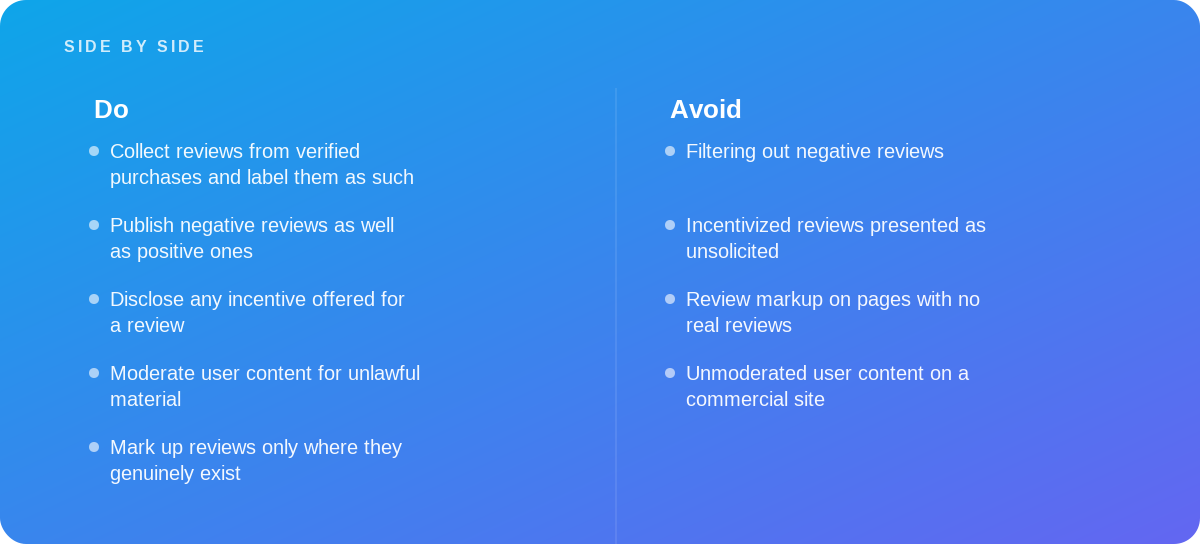
- Collect reviews from verified purchases and label them as such
- Publish negative reviews as well as positive ones
- Disclose any incentive offered for a review
- Moderate user content for unlawful material
- Mark up reviews only where they genuinely exist
Common pitfalls
Watch out for:
- Filtering out negative reviews
- Incentivized reviews presented as unsolicited
- Review markup on pages with no real reviews
- Unmoderated user content on a commercial site
When to call in a specialist
Bottom line Bring in help when review practices may not comply, when structured data has attracted a manual action, or when moderation is not keeping up.
Where this comes from
- European Commission — Consumer protection and reviews
- Federal Trade Commission — Endorsements and reviews
- Google Search Central — Review snippet guidelines
The figures and practices above come from the sources listed.
Working on something like this?
We take on E-commerce Development work for teams who want it done once, properly. Tell us what you are building and we will tell you honestly whether we are the right studio for it. Start a project.
Where to go next
Spotted something wrong? Report an error on this page. We correct on the page and say what changed.