Multi-Currency and Cross-Border Selling: The Decisions That Matter
Selling into other countries, with the currency, tax, duty and compliance handling that requires.
 MediaScaleUp Editorial Team

Why does it matter?
The storefront changes are the easy part; tax, duty and returns obligations are what make cross-border selling complicated.
What are the numbers?
- Display currency may differ from settlement currency
- Import duty a common cause of refused deliveries when unexpected
- Delivered duty paid charging duty at checkout rather than on delivery
- Tax registration thresholds vary by jurisdiction
- Returns cross-border returns are expensive and must be planned
What should I do?
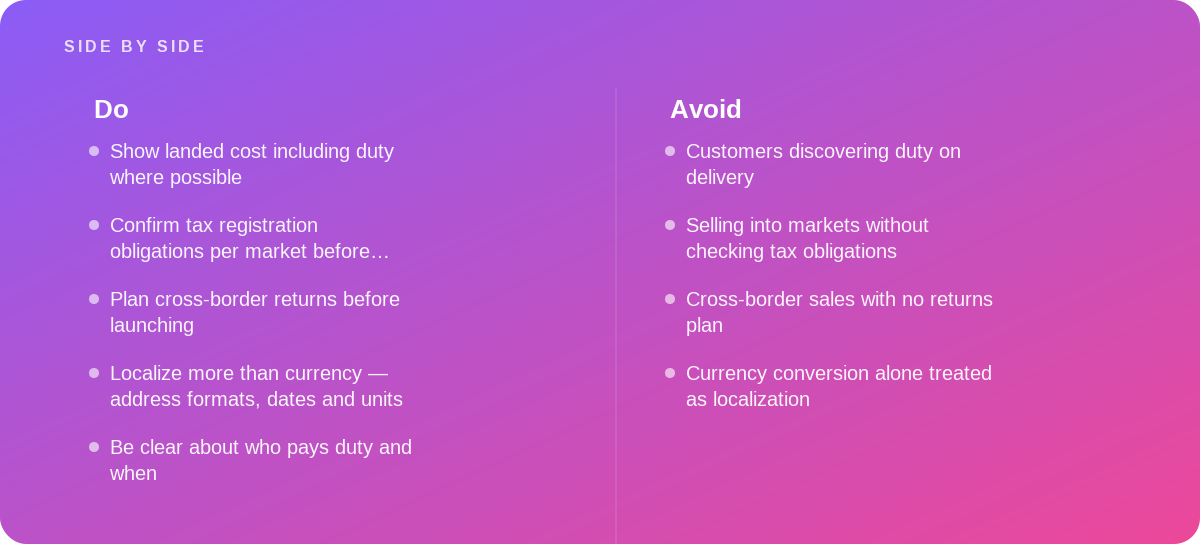
- Show landed cost including duty where possible
- Confirm tax registration obligations per market before selling
- Plan cross-border returns before launching
- Localize more than currency — address formats, dates and units
- Be clear about who pays duty and when
What should I avoid?
Avoid:
- Customers discovering duty on delivery
- Selling into markets without checking tax obligations
- Cross-border sales with no returns plan
- Currency conversion alone treated as localization
When should I get help?
Short answer Bring in help before entering a new market, when deliveries are being refused over unexpected charges, or when tax obligations are unclear.
Where this comes from
- European Commission — VAT and cross-border trade
- Shopify Help Center — International selling
- Stripe Documentation — Multi-currency payments
The figures and practices above come from the sources listed.
Working on something like this?
We take on E-commerce Development work for teams who want it done once, properly. Tell us what you are building and we will tell you honestly whether we are the right studio for it. Start a project.
Where to go next
Spotted something wrong? Report an error on this page. We correct on the page and say what changed.