QR Codes on Print Materials: The Decisions That Matter
Using QR codes on packaging, posters and printed materials to link to digital content.
 MediaScaleUp Editorial Team

At a glance
Why it matters
Why it matters: QR codes connect print to digital, but poor sizing, contrast or destinations make them fail, and scammers exploit them.
Best practice
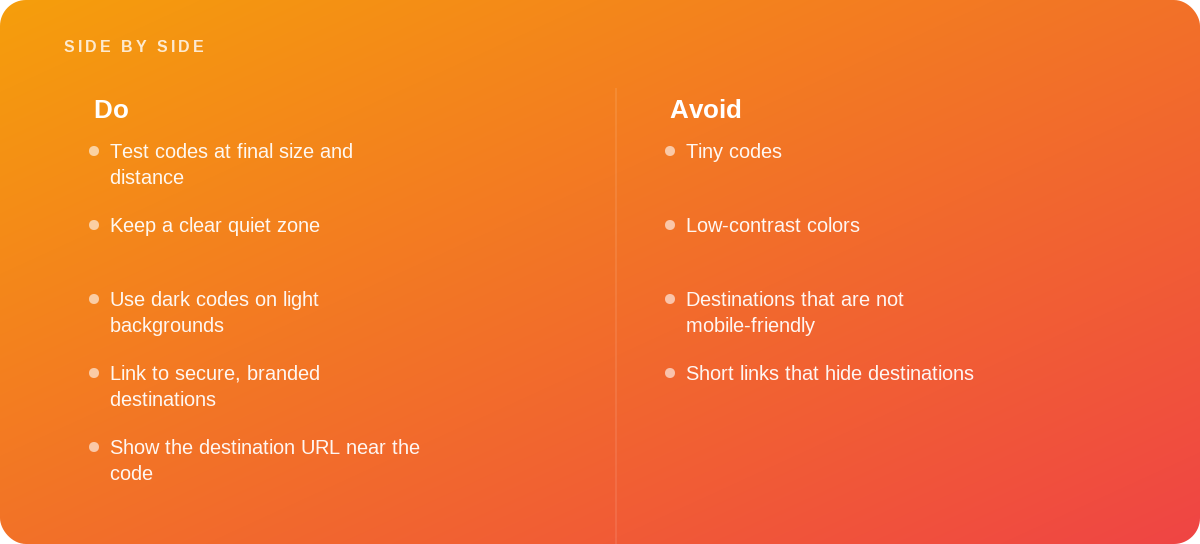
- Test codes at final size and distance
- Keep a clear quiet zone
- Use dark codes on light backgrounds
- Link to secure, branded destinations
- Show the destination URL near the code
Common pitfalls
Watch out for:
- Tiny codes
- Low-contrast colors
- Destinations that are not mobile-friendly
- Short links that hide destinations
When to call in a specialist
Bottom line Bring in help when QR codes appear on packaging or public signs.
Where this comes from
- ISO — ISO/IEC 18004 QR code
- Federal Trade Commission — Scammers hide harmful links in QR codes
The figures and practices above come from the sources listed.
Working on something like this?
We take on Brand & Identity Design work for teams who want it done once, properly. Tell us what you are building and we will tell you honestly whether we are the right studio for it. Start a project.
Where to go next
Spotted something wrong? Report an error on this page. We correct on the page and say what changed.