Patient Education Materials, Done Properly
Written material that explains conditions, treatments and instructions to patients and families.
 MediaScaleUp Editorial Team

Why does it matter?
Health material is often written far above the reading level of the people it serves, which leads to mistakes and anxiety.
What are the numbers?
- Reading level health literacy varies widely across the population
- Plain language improves comprehension and recall
- Translation materials often need several languages
- Review clinical accuracy needs qualified review
What should I do?
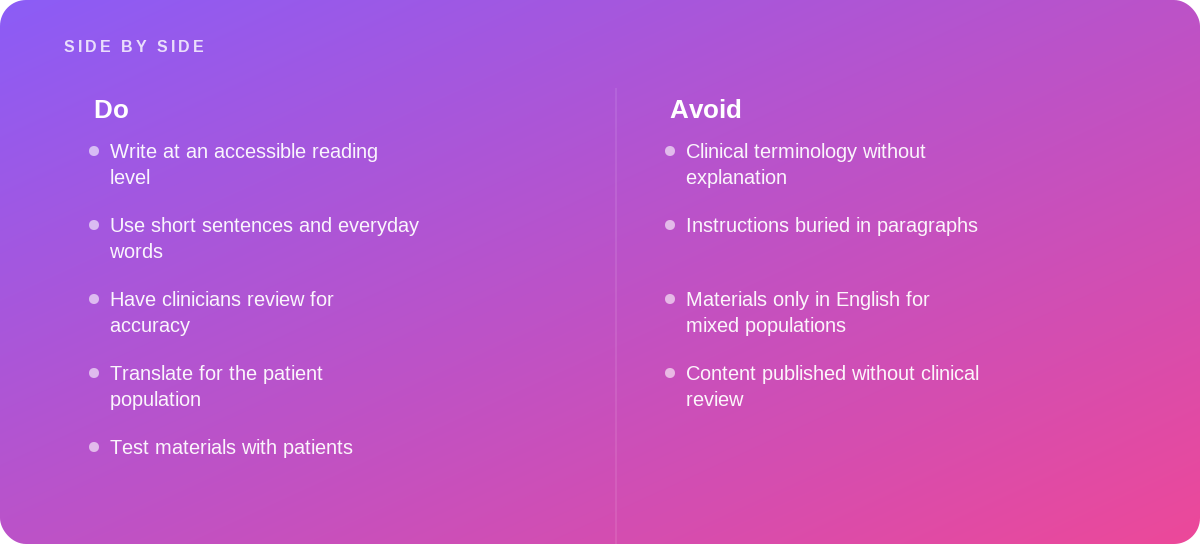
- Write at an accessible reading level
- Use short sentences and everyday words
- Have clinicians review for accuracy
- Translate for the patient population
- Test materials with patients
What should I avoid?
Avoid:
- Clinical terminology without explanation
- Instructions buried in paragraphs
- Materials only in English for mixed populations
- Content published without clinical review
When should I get help?
Short answer Bring in help when patient instructions cause repeat calls.
Where this comes from
- Centers for Disease Control and Prevention — Health communication
- PlainLanguage.gov — Federal Plain Language Guidelines
The figures and practices above come from the sources listed.
Working on something like this?
We take on Content Strategy work for teams who want it done once, properly. Tell us what you are building and we will tell you honestly whether we are the right studio for it. Start a project.
Where to go next
Spotted something wrong? Report an error on this page. We correct on the page and say what changed.