Assembly and Operating Instructions: The Decisions That Matter
The instructions that ship with products, covering assembly, operation, maintenance and safety.
 MediaScaleUp Editorial Team

What is at stake
Bad instructions generate support calls and returns, and for many products they are also a safety document.
The playbook
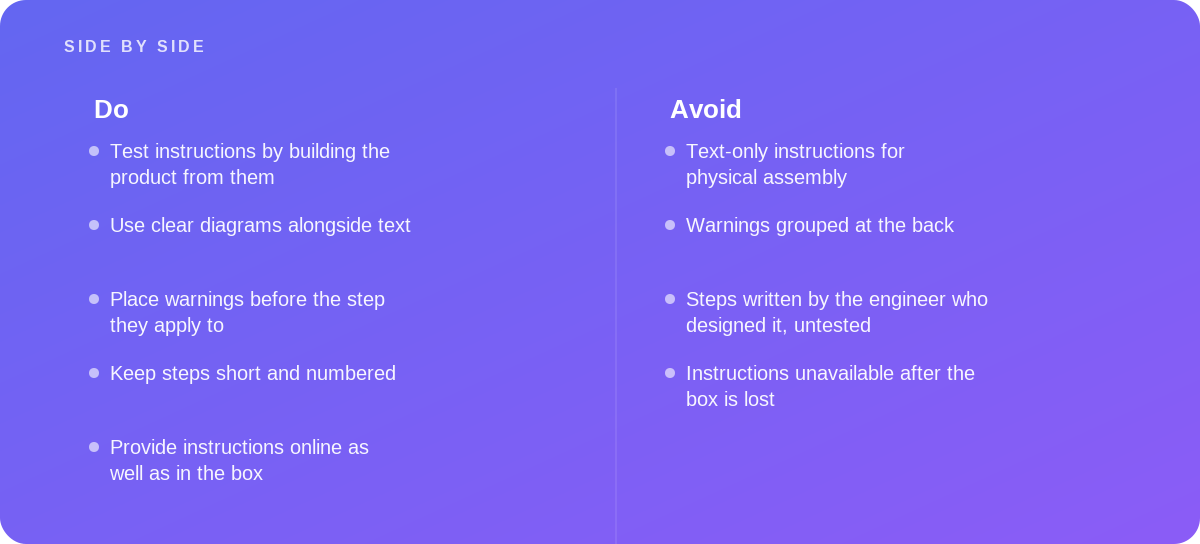
- Test instructions by building the product from them
- Use clear diagrams alongside text
- Place warnings before the step they apply to
- Keep steps short and numbered
- Provide instructions online as well as in the box
Where it goes wrong
Avoid:
- Text-only instructions for physical assembly
- Warnings grouped at the back
- Steps written by the engineer who designed it, untested
- Instructions unavailable after the box is lost
The numbers behind it
| Measure | Figure |
|---|---|
| Warnings | safety warnings follow recognized conventions for signal words |
| Illustrations | diagrams reduce language dependence |
| Sequence | steps must reflect the real assembly order |
| Testing | instructions should be tested with real users |
Getting outside help
When to hand it over: Bring in help when assembly drives returns or complaints.
Where this comes from
- U.S. Consumer Product Safety Commission — Business guidance
- Microsoft Learn — Microsoft Writing Style Guide
The figures and practices above come from the sources listed.
Working on something like this?
We take on Content Strategy work for teams who want it done once, properly. Tell us what you are building and we will tell you honestly whether we are the right studio for it. Start a project.
Where to go next
Spotted something wrong? Report an error on this page. We correct on the page and say what changed.