Making Performance a Team Habit: What Actually Works
Building performance work into everyday development rather than treating it as an occasional project.
 MediaScaleUp Editorial Team

Where most projects go wrong
The usual mistakes:
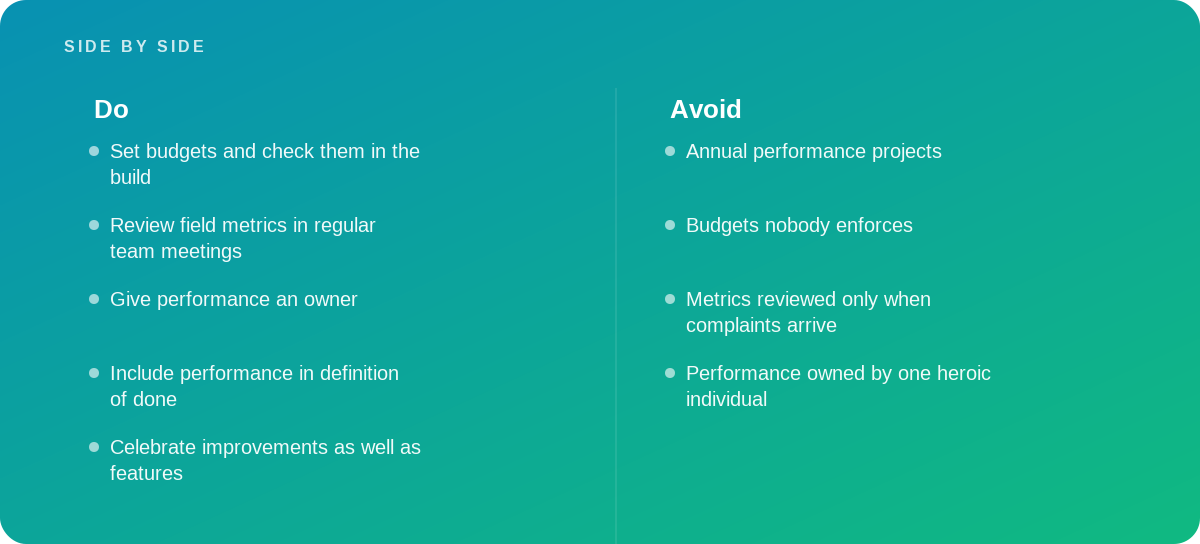
- Annual performance projects
- Budgets nobody enforces
- Metrics reviewed only when complaints arrive
- Performance owned by one heroic individual
What good looks like instead
- Set budgets and check them in the build
- Review field metrics in regular team meetings
- Give performance an owner
- Include performance in definition of done
- Celebrate improvements as well as features
Why it matters
Performance decays with every release, and periodic clean-ups cost more than continuous attention.
The specs that matter
| Measure | Figure |
|---|---|
| Regression | pages get slower through ordinary feature work |
| Budgets | agreed limits make regressions visible |
| Ownership | performance needs an owner or it belongs to nobody |
| Visibility | dashboards keep attention on the numbers |
Knowing when to hand it over
Tip: Bring in help when performance gains keep eroding.
Where this comes from
- web.dev — Performance budgets
- Chrome for Developers — Core Web Vitals
The figures and practices above come from the sources listed.
Working on something like this?
We take on Performance & Accessibility work for teams who want it done once, properly. Tell us what you are building and we will tell you honestly whether we are the right studio for it. Start a project.
Where to go next
Spotted something wrong? Report an error on this page. We correct on the page and say what changed.