How to Get Writing Design Principles Right
A small set of stated principles that guide design decisions on a product or service.
 MediaScaleUp Editorial Team

At a glance
- Trade-offs good principles express a preference between two goods
- Specificity principles should be specific to the product
- Number a handful is easier to apply than a dozen
- Testing principles should resolve real disputes
Why it matters
Why it matters: Useful principles help teams choose between options, while generic ones are decoration.
Best practice
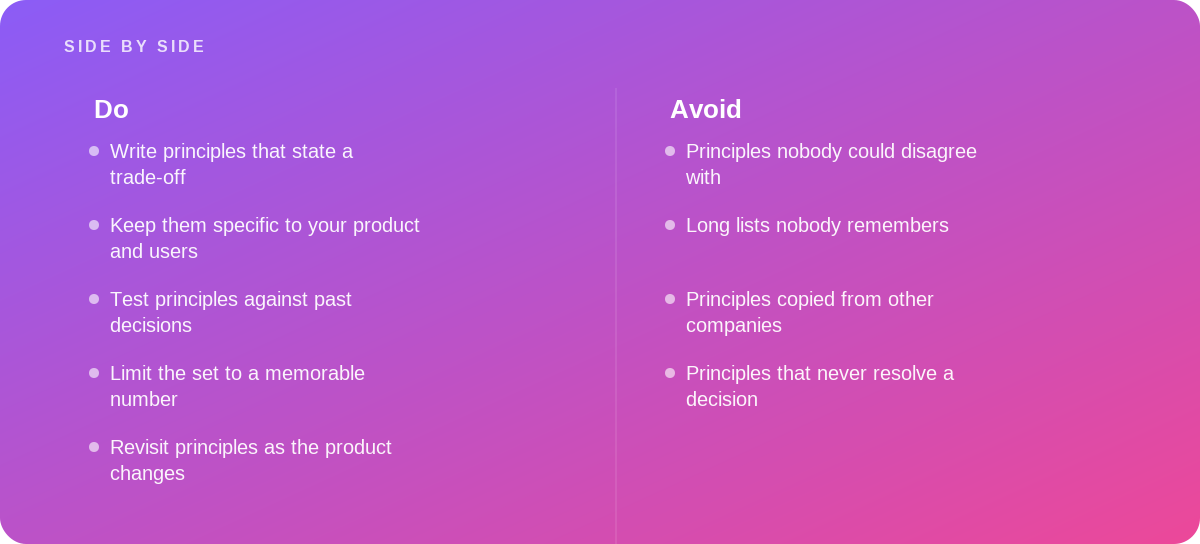
- Write principles that state a trade-off
- Keep them specific to your product and users
- Test principles against past decisions
- Limit the set to a memorable number
- Revisit principles as the product changes
Common pitfalls
Watch out for:
- Principles nobody could disagree with
- Long lists nobody remembers
- Principles copied from other companies
- Principles that never resolve a decision
When to call in a specialist
Bottom line Bring in help when design decisions keep reopening.
Where this comes from
- GOV.UK Service Manual — Design principles
- Nielsen Norman Group — Design systems
The figures and practices above come from the sources listed.
Working on something like this?
We take on UI & UX Design work for teams who want it done once, properly. Tell us what you are building and we will tell you honestly whether we are the right studio for it. Start a project.
Where to go next
Spotted something wrong? Report an error on this page. We correct on the page and say what changed.