How to Get Working with AI Image Generators Right
Using generative tools to produce or extend images, and the practical limits of doing so in commercial work.
 MediaScaleUp Editorial Team
What is at stake
These tools are fast but inconsistent, and commercial use raises questions about rights, accuracy and disclosure.
The playbook
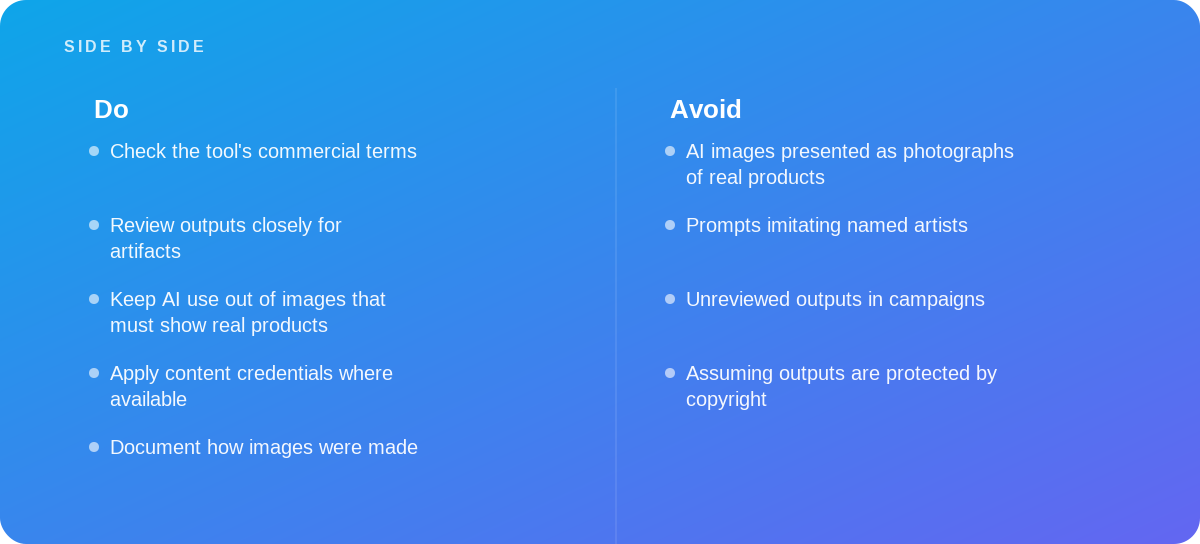
- Check the tool's commercial terms
- Review outputs closely for artifacts
- Keep AI use out of images that must show real products
- Apply content credentials where available
- Document how images were made
Where it goes wrong
Avoid:
- AI images presented as photographs of real products
- Prompts imitating named artists
- Unreviewed outputs in campaigns
- Assuming outputs are protected by copyright
The numbers behind it
| Measure | Figure |
|---|---|
| Authorship | the Copyright Office protects only human-authored material |
| Disclosure | platforms may require metadata marking AI-generated images |
| Artifacts | text, hands and product details are common failure points |
| Tool terms | services set their own commercial use terms |
Getting outside help
When to hand it over: Bring in help before using generated imagery commercially.
Where this comes from
- U.S. Copyright Office — Copyright and Artificial Intelligence
- Content Authenticity Initiative — Content Credentials
The figures and practices above come from the sources listed.
Working on something like this?
We take on Image Editing & Retouching work for teams who want it done once, properly. Tell us what you are building and we will tell you honestly whether we are the right studio for it. Start a project.
Where to go next
Spotted something wrong? Report an error on this page. We correct on the page and say what changed.