How to Get Card Testing Attacks Right
Fraud where criminals use a store's checkout to test stolen card numbers with small transactions, often in large automated bursts.
 MediaScaleUp Editorial Team

What is at stake
Card testing causes fees, disputes and potential account restrictions from payment providers, even when the amounts are small.
The playbook
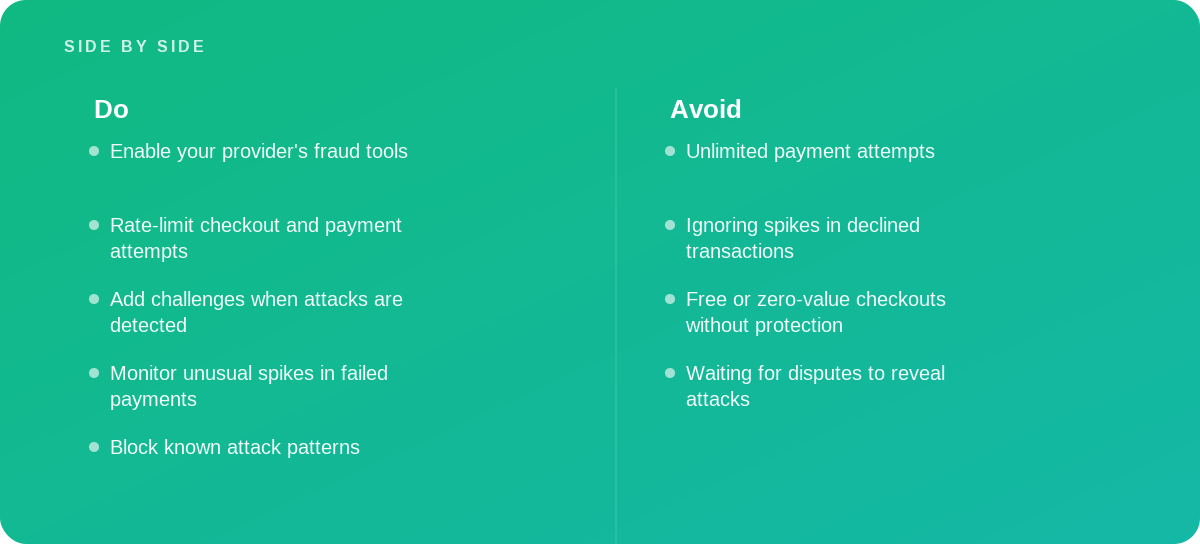
- Enable your provider's fraud tools
- Rate-limit checkout and payment attempts
- Add challenges when attacks are detected
- Monitor unusual spikes in failed payments
- Block known attack patterns
Where it goes wrong
Avoid:
- Unlimited payment attempts
- Ignoring spikes in declined transactions
- Free or zero-value checkouts without protection
- Waiting for disputes to reveal attacks
The numbers behind it
| Measure | Figure |
|---|---|
| Pattern | many small authorizations or payments in a short time |
| Costs | processing fees, disputes and provider scrutiny |
| Defenses | rate limiting, CAPTCHA challenges and fraud screening |
| Payment providers | offer tools to detect and block card testing |
Getting outside help
When to hand it over: Bring in help when failed payments spike or your provider warns about card testing.
Where this comes from
- Stripe Documentation — Card testing
- OWASP — Automated Threats to Web Applications
The figures and practices above come from the sources listed.
Working on something like this?
We take on E-commerce Development work for teams who want it done once, properly. Tell us what you are building and we will tell you honestly whether we are the right studio for it. Start a project.
Where to go next
Spotted something wrong? Report an error on this page. We correct on the page and say what changed.