Hair and Fur Grooming: The Decisions That Matter
Creating hair and fur for characters, animals and products using curve-based systems that are styled, simulated and rendered.
 MediaScaleUp Editorial Team
What is at stake
Hair and fur are critical for realism but heavy to render and simulate, so grooming needs planning for the final output.
The playbook
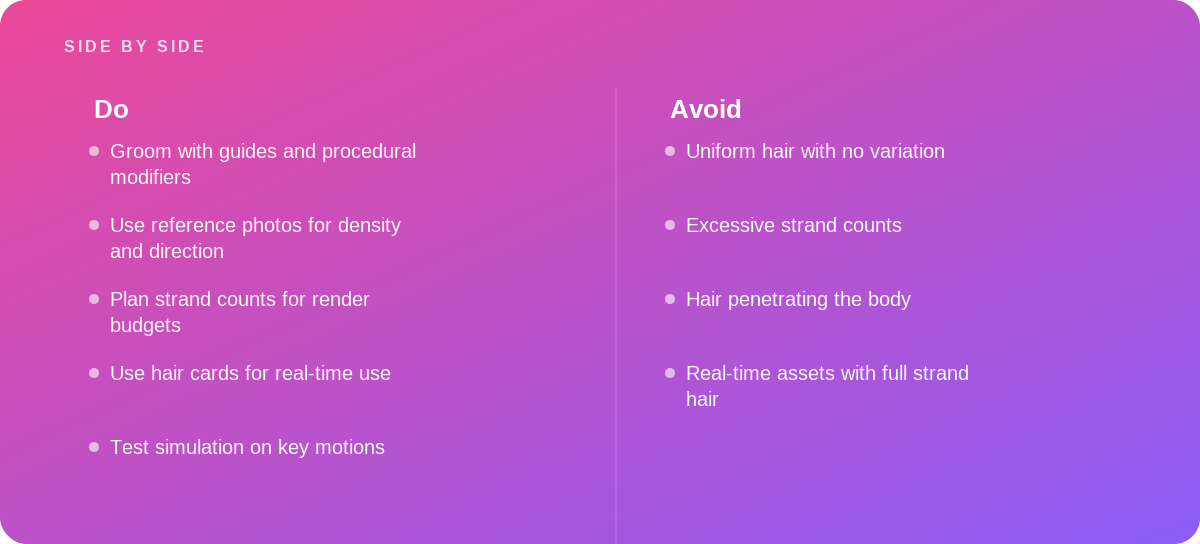
- Groom with guides and procedural modifiers
- Use reference photos for density and direction
- Plan strand counts for render budgets
- Use hair cards for real-time use
- Test simulation on key motions
Where it goes wrong
Avoid:
- Uniform hair with no variation
- Excessive strand counts
- Hair penetrating the body
- Real-time assets with full strand hair
The numbers behind it
| Measure | Figure |
|---|---|
| Representation | curves or strands generated on surfaces |
| Guides | a few guide hairs control many rendered strands |
| Simulation | hair dynamics add movement |
| Real time | games often use hair cards instead of strands |
Getting outside help
When to hand it over: Bring in help when creating characters, animals or products with fur or hair.
Where this comes from
- Blender Foundation — Blender manual: Hair curves
- Unreal Engine Documentation — Hair rendering and simulation
The figures and practices above come from the sources listed.
Working on something like this?
We take on 3D Design & Development work for teams who want it done once, properly. Tell us what you are building and we will tell you honestly whether we are the right studio for it. Start a project.
Where to go next
Spotted something wrong? Report an error on this page. We correct on the page and say what changed.