Dynamic Range in Cameras: What Actually Works
How much detail a camera can hold between the darkest and brightest parts of a scene.
 MediaScaleUp Editorial Team
What is at stake
Dynamic range decides whether windows blow out and shadows block up, and it shapes how footage must be exposed.
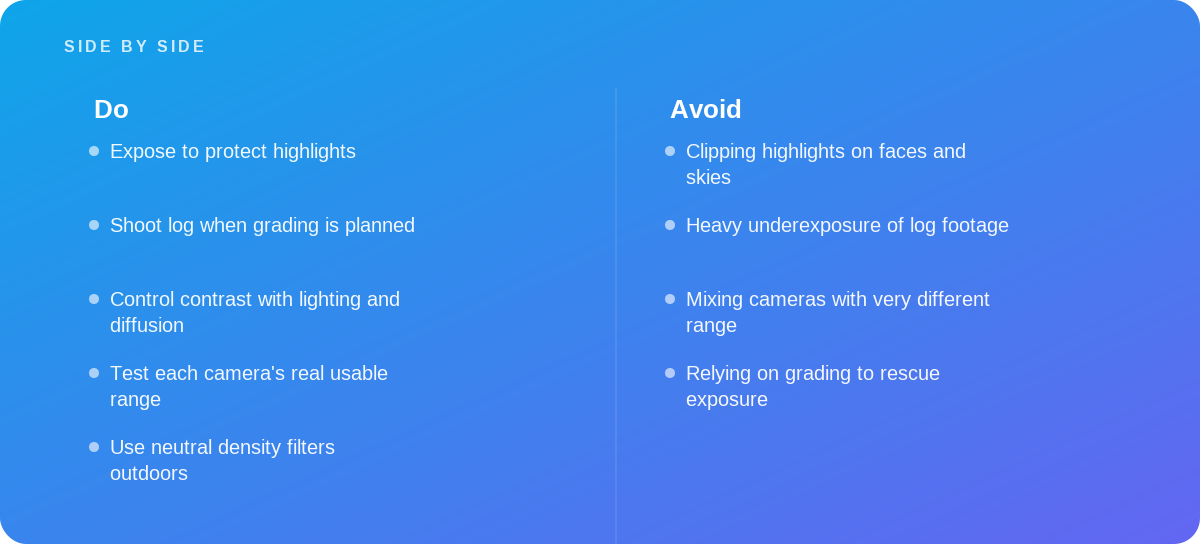
The playbook
- Expose to protect highlights
- Shoot log when grading is planned
- Control contrast with lighting and diffusion
- Test each camera's real usable range
- Use neutral density filters outdoors
Where it goes wrong
Avoid:
- Clipping highlights on faces and skies
- Heavy underexposure of log footage
- Mixing cameras with very different range
- Relying on grading to rescue exposure
The numbers behind it
| Measure | Figure |
|---|---|
| Stops | dynamic range is measured in stops |
| Log recording | preserves more range for grading |
| Highlight recovery | clipped highlights cannot be restored |
| Sensor differences | cameras vary significantly in usable range |
Getting outside help
When to hand it over: Bring in help when shooting high-contrast interiors.
Where this comes from
- Blackmagic Design — DaVinci Resolve Reference Manual
- Academy Color Encoding System — Documentation
The figures and practices above come from the sources listed.
Working on something like this?
We take on Video Editing & Production work for teams who want it done once, properly. Tell us what you are building and we will tell you honestly whether we are the right studio for it. Start a project.
Where to go next
Spotted something wrong? Report an error on this page. We correct on the page and say what changed.