Archival Footage and Clearances: What Actually Works
Using existing film, news or stock footage in a production, and securing the rights to do so.
 MediaScaleUp Editorial Team

Why does it matter?
Archive footage carries copyright, and clearance covers territory, term and media, which is where productions get caught out.
What are the numbers?
- Rights holders archives license footage under specific terms
- Federal works works of the US federal government are generally not protected by copyright
- Clearance scope licenses define territory, term and media
- Third-party content music, logos and people within footage may need separate clearance
What should I do?
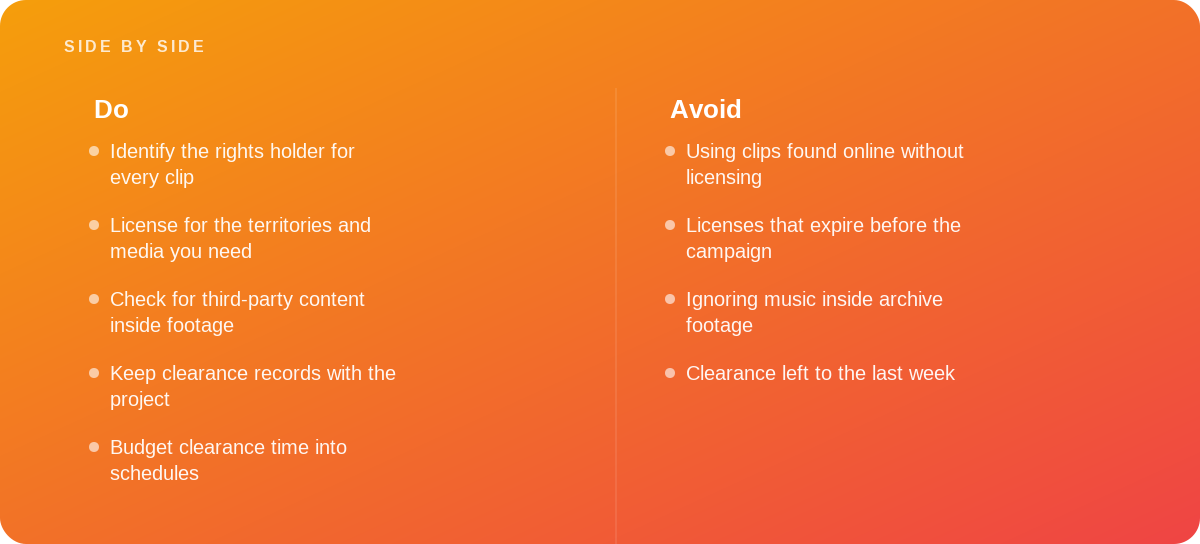
- Identify the rights holder for every clip
- License for the territories and media you need
- Check for third-party content inside footage
- Keep clearance records with the project
- Budget clearance time into schedules
What should I avoid?
Avoid:
- Using clips found online without licensing
- Licenses that expire before the campaign
- Ignoring music inside archive footage
- Clearance left to the last week
When should I get help?
Short answer Bring in help when documentaries rely on archive material.
Where this comes from
- U.S. Copyright Office — Frequently asked questions
- U.S. Copyright Office — Compendium of U.S. Copyright Office Practices
The figures and practices above come from the sources listed.
Working on something like this?
We take on Video Editing & Production work for teams who want it done once, properly. Tell us what you are building and we will tell you honestly whether we are the right studio for it. Start a project.
Where to go next
Spotted something wrong? Report an error on this page. We correct on the page and say what changed.