Database Transactions, Done Properly
Grouping database operations so they either all succeed or all fail, keeping data consistent.
 Marcus Adeyemi

Where most projects go wrong
The usual mistakes:
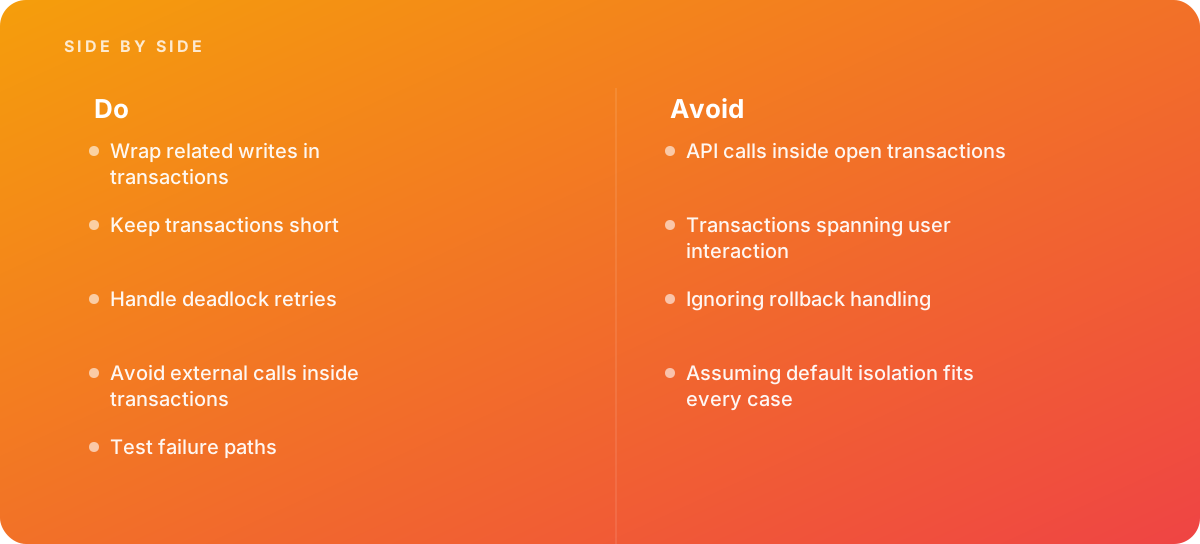
- API calls inside open transactions
- Transactions spanning user interaction
- Ignoring rollback handling
- Assuming default isolation fits every case
What good looks like instead
- Wrap related writes in transactions
- Keep transactions short
- Handle deadlock retries
- Avoid external calls inside transactions
- Test failure paths
Why it matters
Without transactions, interrupted operations leave half-finished data such as orders without payments.
The specs that matter
| Measure | Figure |
|---|---|
| Atomicity | all operations in a transaction succeed or none do |
| Isolation levels | control what concurrent transactions can see |
| Deadlocks | occur when transactions wait on each other |
| Long transactions | hold locks and block other work |
Knowing when to hand it over
Tip: Bring in help when data inconsistencies appear after failures.
Where this comes from
- Laravel Documentation — Database transactions
- Microsoft Learn — Transactions
The figures and practices above come from the sources listed.
Working on something like this?
We take on Web Design & Development work for teams who want it done once, properly. Tell us what you are building and we will tell you honestly whether we are the right studio for it. Start a project.
Where to go next
Spotted something wrong? Report an error on this page. We correct on the page and say what changed.