Competitor Comparison Pages, Done Properly
Pages that compare your product with competitors or alternatives, often targeting searches such as product versus product.
 MediaScaleUp Editorial Team

At a glance
- FTC standard comparative claims must be truthful and substantiated
- Trademarks competitors' names can be used to identify them, but not to imply endorsement
- Currency competitor details go out of date quickly
- Search intent comparison searches often come from buyers close to deciding
Why it matters
Why it matters: Buyers search for comparisons late in the decision, but comparisons must be fair and accurate to be credible and legally safe.
Best practice
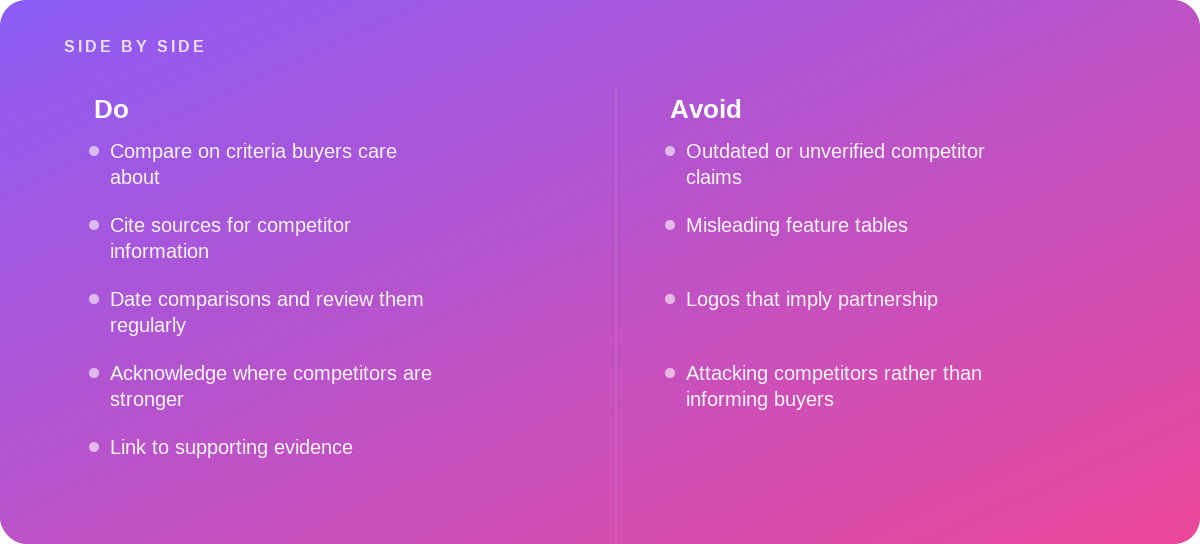
- Compare on criteria buyers care about
- Cite sources for competitor information
- Date comparisons and review them regularly
- Acknowledge where competitors are stronger
- Link to supporting evidence
Common pitfalls
Watch out for:
- Outdated or unverified competitor claims
- Misleading feature tables
- Logos that imply partnership
- Attacking competitors rather than informing buyers
When to call in a specialist
Bottom line Bring in help when publishing comparison pages, especially in regulated or litigious markets.
Where this comes from
- Federal Trade Commission — Advertising FAQs: A guide for small business
- United States Patent and Trademark Office — Trademark basics
The figures and practices above come from the sources listed.
Working on something like this?
We take on Content Strategy work for teams who want it done once, properly. Tell us what you are building and we will tell you honestly whether we are the right studio for it. Start a project.
Where to go next
Spotted something wrong? Report an error on this page. We correct on the page and say what changed.





