A Practical Guide to Location Pages
Pages for individual business locations or service areas, with local details such as address, hours and staff.
 MediaScaleUp Editorial Team

What is at stake
Location pages help local customers, but thin, duplicated city pages can be treated as doorway spam.
The playbook
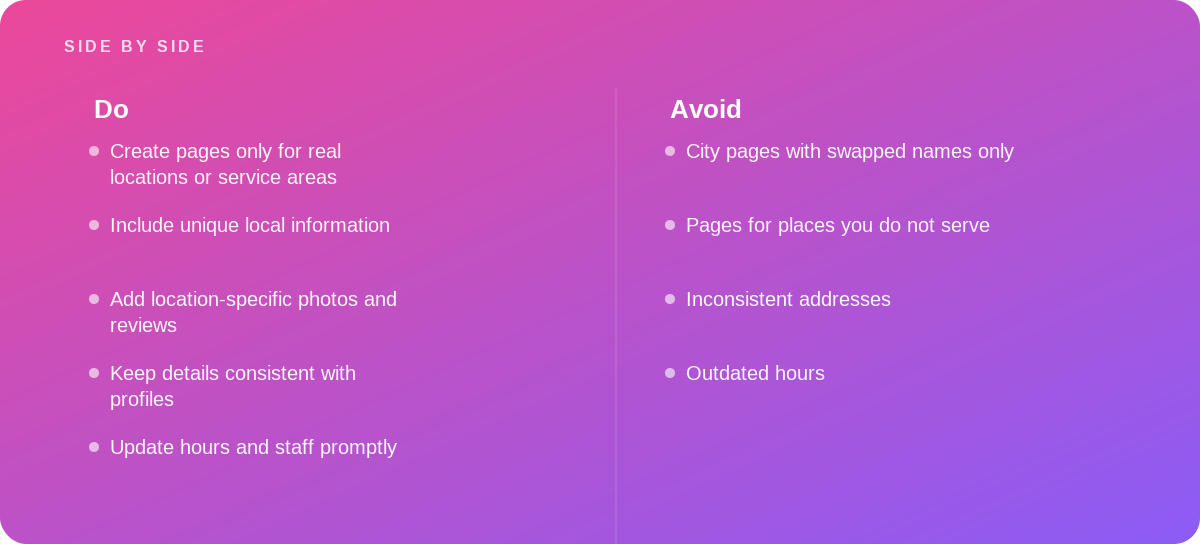
- Create pages only for real locations or service areas
- Include unique local information
- Add location-specific photos and reviews
- Keep details consistent with profiles
- Update hours and staff promptly
Where it goes wrong
Avoid:
- City pages with swapped names only
- Pages for places you do not serve
- Inconsistent addresses
- Outdated hours
The numbers behind it
| Measure | Figure |
|---|---|
| Doorway abuse | Google's spam policies cover pages made only to rank for similar local queries |
| Unique details | real address, hours and staff distinguish locations |
| Structured data | LocalBusiness markup can describe locations |
| Consistency | details should match business profiles |
Getting outside help
When to hand it over: Bring in help when multi-location businesses plan local content.
Where this comes from
- Google Search Central — Spam policies for Google web search
- Google Search Central — Local business structured data
The figures and practices above come from the sources listed.
Working on something like this?
We take on Content Strategy work for teams who want it done once, properly. Tell us what you are building and we will tell you honestly whether we are the right studio for it. Start a project.
Where to go next
Spotted something wrong? Report an error on this page. We correct on the page and say what changed.