Catalog Taxonomy and Categories: The Decisions That Matter
Organizing products into categories and subcategories that shoppers understand and that support navigation, filters and search.
 MediaScaleUp Editorial Team

At a glance
- Hierarchy categories and subcategories that match shopper mental models
- Attributes category-specific attributes power filters
- Google product category Merchant Center uses its own product taxonomy
- Research card sorting helps design categories
Why it matters
Why it matters: A clear taxonomy helps shoppers browse and helps search engines understand a store, while messy categories hide products.
Best practice
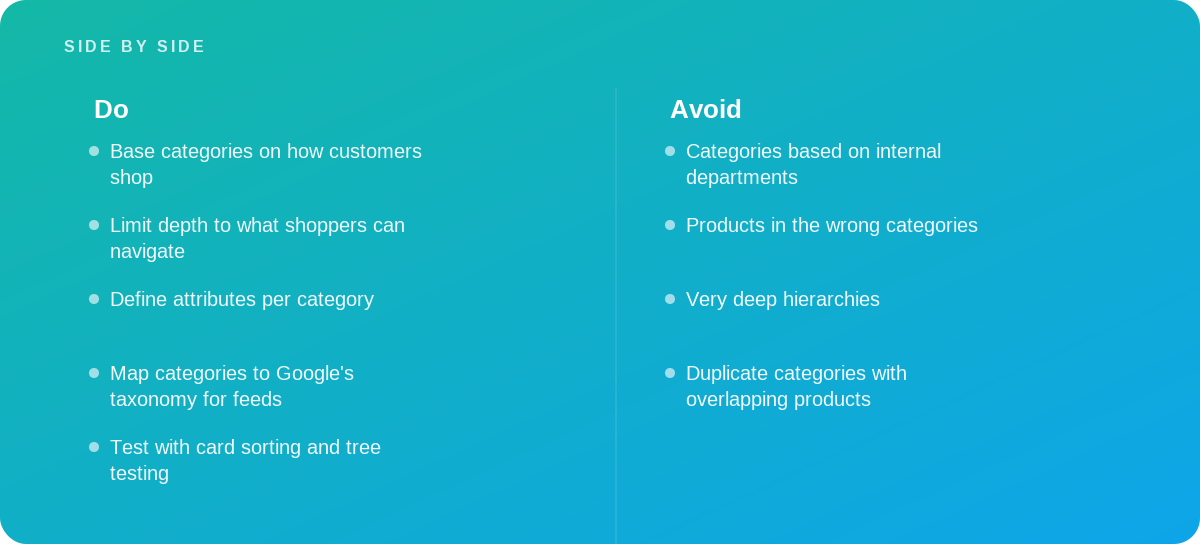
- Base categories on how customers shop
- Limit depth to what shoppers can navigate
- Define attributes per category
- Map categories to Google's taxonomy for feeds
- Test with card sorting and tree testing
Common pitfalls
Watch out for:
- Categories based on internal departments
- Products in the wrong categories
- Very deep hierarchies
- Duplicate categories with overlapping products
When to call in a specialist
Bottom line Bring in help when restructuring a large catalog.
Where this comes from
- Baymard Institute — E-commerce navigation research
- Google Merchant Center Help — Google product category
The figures and practices above come from the sources listed.
Working on something like this?
We take on E-commerce Development work for teams who want it done once, properly. Tell us what you are building and we will tell you honestly whether we are the right studio for it. Start a project.
Where to go next
Spotted something wrong? Report an error on this page. We correct on the page and say what changed.