A Practical Guide to Preorders
Taking orders for products before they are in stock, often for new launches or limited releases.
 MediaScaleUp Editorial Team

Where most projects go wrong
The usual mistakes:
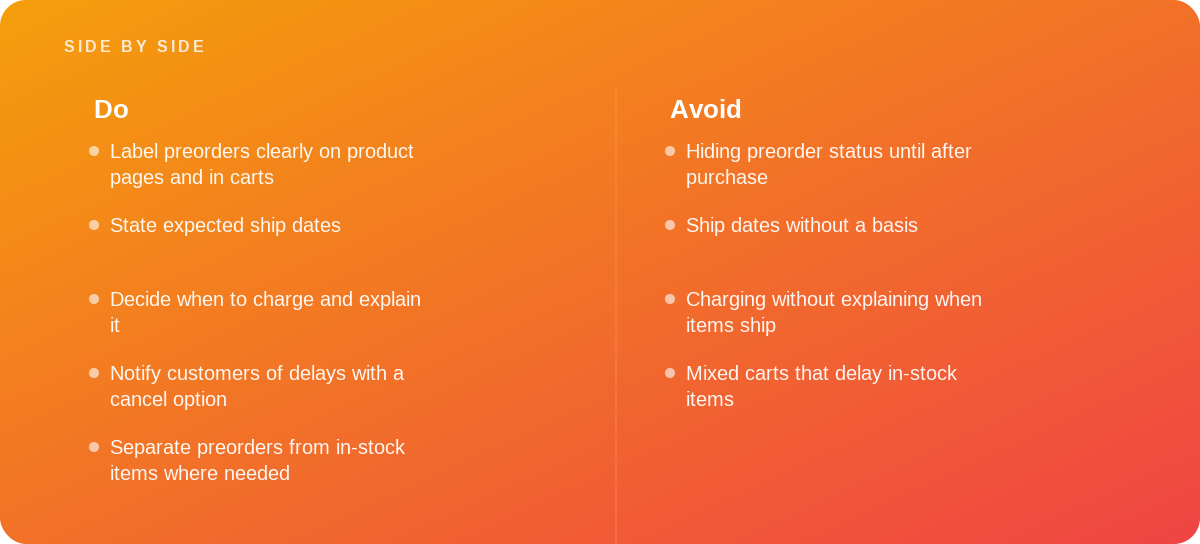
- Hiding preorder status until after purchase
- Ship dates without a basis
- Charging without explaining when items ship
- Mixed carts that delay in-stock items
What good looks like instead
- Label preorders clearly on product pages and in carts
- State expected ship dates
- Decide when to charge and explain it
- Notify customers of delays with a cancel option
- Separate preorders from in-stock items where needed
Why it matters
Preorders capture demand early, but the FTC Mail Order Rule and card network rules govern how shipping promises and charges are handled.
The specs that matter
| Measure | Figure |
|---|---|
| Shipping promises | must have a reasonable basis under the FTC Mail Order Rule |
| Delays | customers must be told and offered cancellation |
| Charging | some stores charge at order and others at shipment |
| Clarity | preorder status must be obvious before purchase |
Knowing when to hand it over
Tip: Bring in help when planning product launches with preorders.
Where this comes from
- Federal Trade Commission — Business Guide to the Mail, Internet, or Telephone Order Merchandise Rule
- Shopify Help Center — Preorders
The figures and practices above come from the sources listed.
Working on something like this?
We take on E-commerce Development work for teams who want it done once, properly. Tell us what you are building and we will tell you honestly whether we are the right studio for it. Start a project.
Where to go next
Spotted something wrong? Report an error on this page. We correct on the page and say what changed.