A Practical Guide to Site Reputation Abuse
Publishing third-party content on a strong domain mainly to exploit its ranking signals, sometimes called parasite SEO.
 MediaScaleUp Editorial Team

At a glance
- Policy Google's spam policies cover site reputation abuse
- Typical cases third-party coupon, review or sponsored sections
- Oversight the question is whether the host exercises real editorial control
- Consequences affected sections can lose visibility
Why it matters
Why it matters: Google added this to its spam policies, and publishers hosting coupon or review sections have been affected.
Best practice
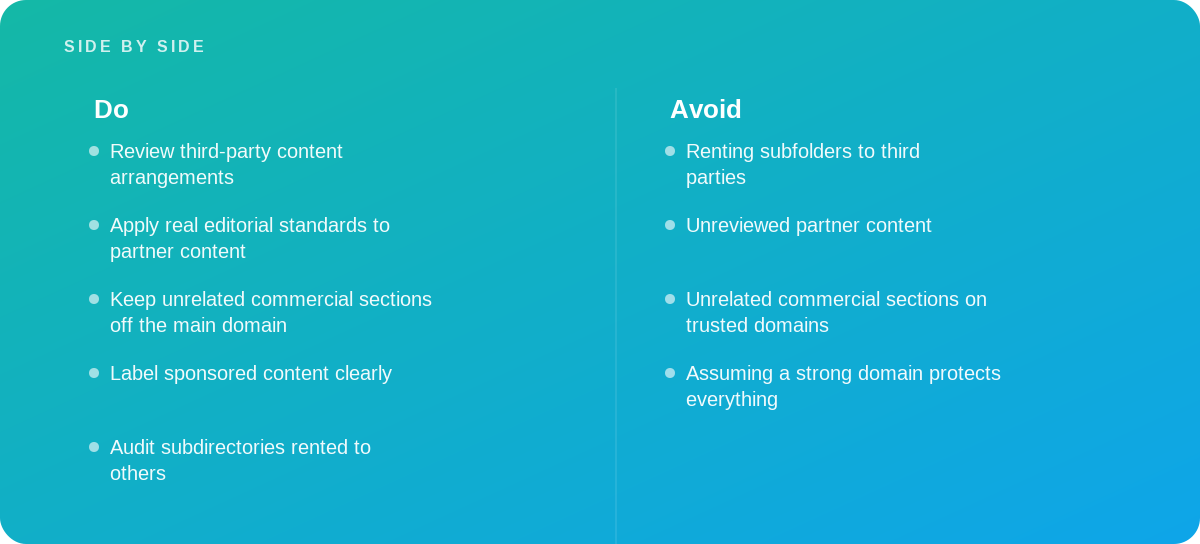
- Review third-party content arrangements
- Apply real editorial standards to partner content
- Keep unrelated commercial sections off the main domain
- Label sponsored content clearly
- Audit subdirectories rented to others
Common pitfalls
Watch out for:
- Renting subfolders to third parties
- Unreviewed partner content
- Unrelated commercial sections on trusted domains
- Assuming a strong domain protects everything
When to call in a specialist
Bottom line Bring in help when partners want to publish on your domain.
Where this comes from
- Google Search Central — Spam policies for Google web search
- Google Search Central — Sponsored and native content
The figures and practices above come from the sources listed.
Working on something like this?
We take on SEO Services work for teams who want it done once, properly. Tell us what you are building and we will tell you honestly whether we are the right studio for it. Start a project.
Where to go next
Spotted something wrong? Report an error on this page. We correct on the page and say what changed.






