A Practical Guide to Landing Page Design
A page built for one audience arriving with one intent, where every element either supports the single action or is removed.
 Marcus Adeyemi

What is at stake
A landing page that tries to serve three audiences serves none of them, and the discipline of deciding on one is usually worth more than any individual design choice on the page.
The playbook
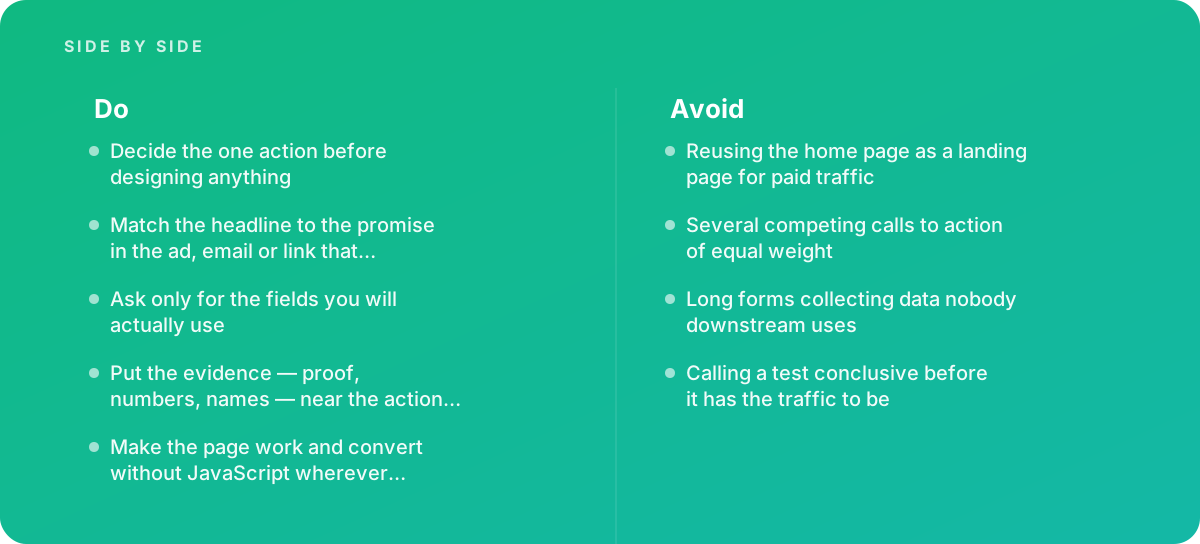
- Decide the one action before designing anything
- Match the headline to the promise in the ad, email or link that delivered the visit
- Ask only for the fields you will actually use
- Put the evidence — proof, numbers, names — near the action rather than in a separate section
- Make the page work and convert without JavaScript wherever possible
Where it goes wrong
Avoid:
- Reusing the home page as a landing page for paid traffic
- Several competing calls to action of equal weight
- Long forms collecting data nobody downstream uses
- Calling a test conclusive before it has the traffic to be
The numbers behind it
| Measure | Figure |
|---|---|
| Structural convention | one primary action, repeated rather than multiplied |
| What usually reduces conversion | unnecessary form fields and competing calls to action |
| Message match | the headline should echo the ad or link that brought the visitor |
| Testing requirement | enough traffic to reach significance, or the test tells you nothing |
Getting outside help
When to hand it over: Bring in help when paid traffic is converting well below the account average, when tests keep coming back inconclusive, or when the page has to serve several very different audiences at once.
Where this comes from
- Nielsen Norman Group — Landing page usability
- Google Ads Help — Landing page experience
- Baymard Institute — Form usability research
The figures and practices above come from the sources listed.
Working on something like this?
We take on Web Design & Development work for teams who want it done once, properly. Tell us what you are building and we will tell you honestly whether we are the right studio for it. Start a project.
Where to go next
Spotted something wrong? Report an error on this page. We correct on the page and say what changed.