A Practical Guide to Breadcrumb Structured Data
Markup that describes a page's position in the site hierarchy, which Google can show as a breadcrumb trail in search results in place of the raw URL.
 MediaScaleUp Editorial Team

Why does it matter?
Breadcrumbs help searchers understand where a page sits before they click, and the markup is cheap to add when a site already shows visible breadcrumbs.
What are the numbers?
- Type BreadcrumbList with ListItem entries
- Required properties item, name and position for each entry
- Display Google may show breadcrumbs instead of the URL path
- Multiple trails a page can have more than one breadcrumb trail
What should I do?
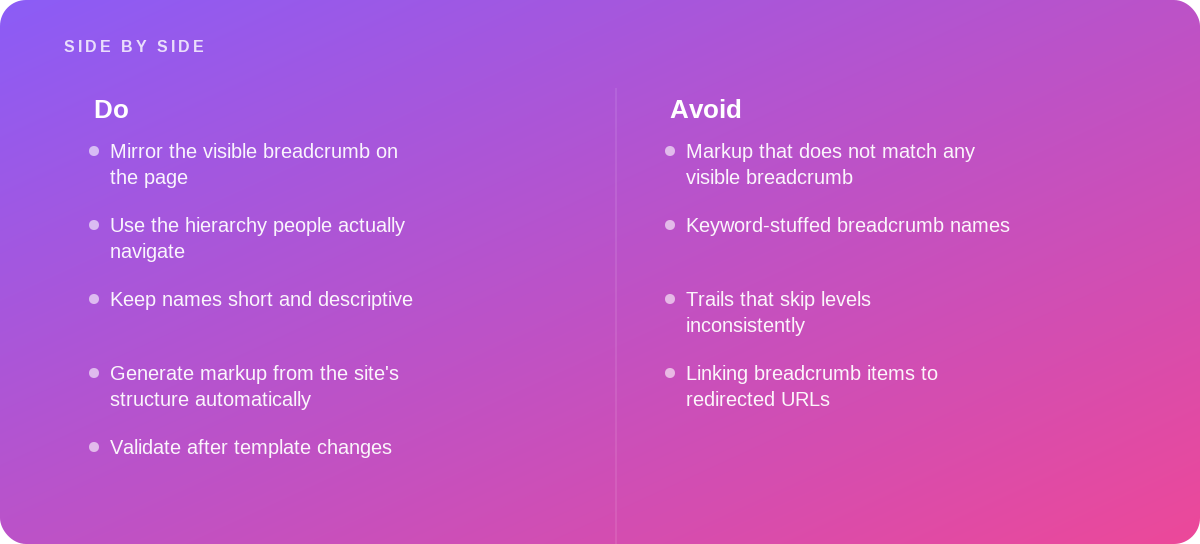
- Mirror the visible breadcrumb on the page
- Use the hierarchy people actually navigate
- Keep names short and descriptive
- Generate markup from the site's structure automatically
- Validate after template changes
What should I avoid?
Avoid:
- Markup that does not match any visible breadcrumb
- Keyword-stuffed breadcrumb names
- Trails that skip levels inconsistently
- Linking breadcrumb items to redirected URLs
When should I get help?
Short answer Bring in help when restructuring site navigation, or when breadcrumb errors appear in Search Console.
Where this comes from
- Google Search Central — Breadcrumb structured data
- Schema.org — BreadcrumbList
The figures and practices above come from the sources listed.
Working on something like this?
We take on SEO Services work for teams who want it done once, properly. Tell us what you are building and we will tell you honestly whether we are the right studio for it. Start a project.
Where to go next
Spotted something wrong? Report an error on this page. We correct on the page and say what changed.