CGI & Hybrid Imagery vs Product Photography
Compare CGI & hybrid imagery with product photography on cost, turnaround, quality, skills and deliverables, and learn when each one wins or you need both.
Last revised
CGI & hybrid imagery vs product photography is one of the most common choices clients bring to us, because both sit under Photography & Product Visuals and both end in the same place: an image of your product that has to sell it. CGI & Hybrid Imagery is rendered product imagery matched to photographic plates, with camera, lighting, grain and color pipeline aligned so the composite survives a close look. Product Photography is e-commerce, apparel, jewelry, furniture and food photography shot against a documented, repeatable setup with a color reference in every session.
This page is for brand owners, e-commerce and marketing leads, and in-house creative teams who need to decide which of the two a project actually needs. The short answer on price and speed is simple: CGI & Hybrid Imagery starts at $120.00 per image, with a typical turnaround of 5–15 working days, and Product Photography starts at $32.00 per product, with a typical turnaround of 3–7 working days. The longer answer depends on what exists physically, what the image has to show, and how many variations you need.
Below we compare the two criterion by criterion: cost drivers, turnaround, quality, the skills involved and what you receive. Then we say plainly when each one wins, when a project needs both, and give a decision checklist you can run against your own brief.
The two services, explained properly
Before comparing them, it helps to be precise about what each service does, because the names hide a lot of the difference.
What CGI & hybrid imagery actually is
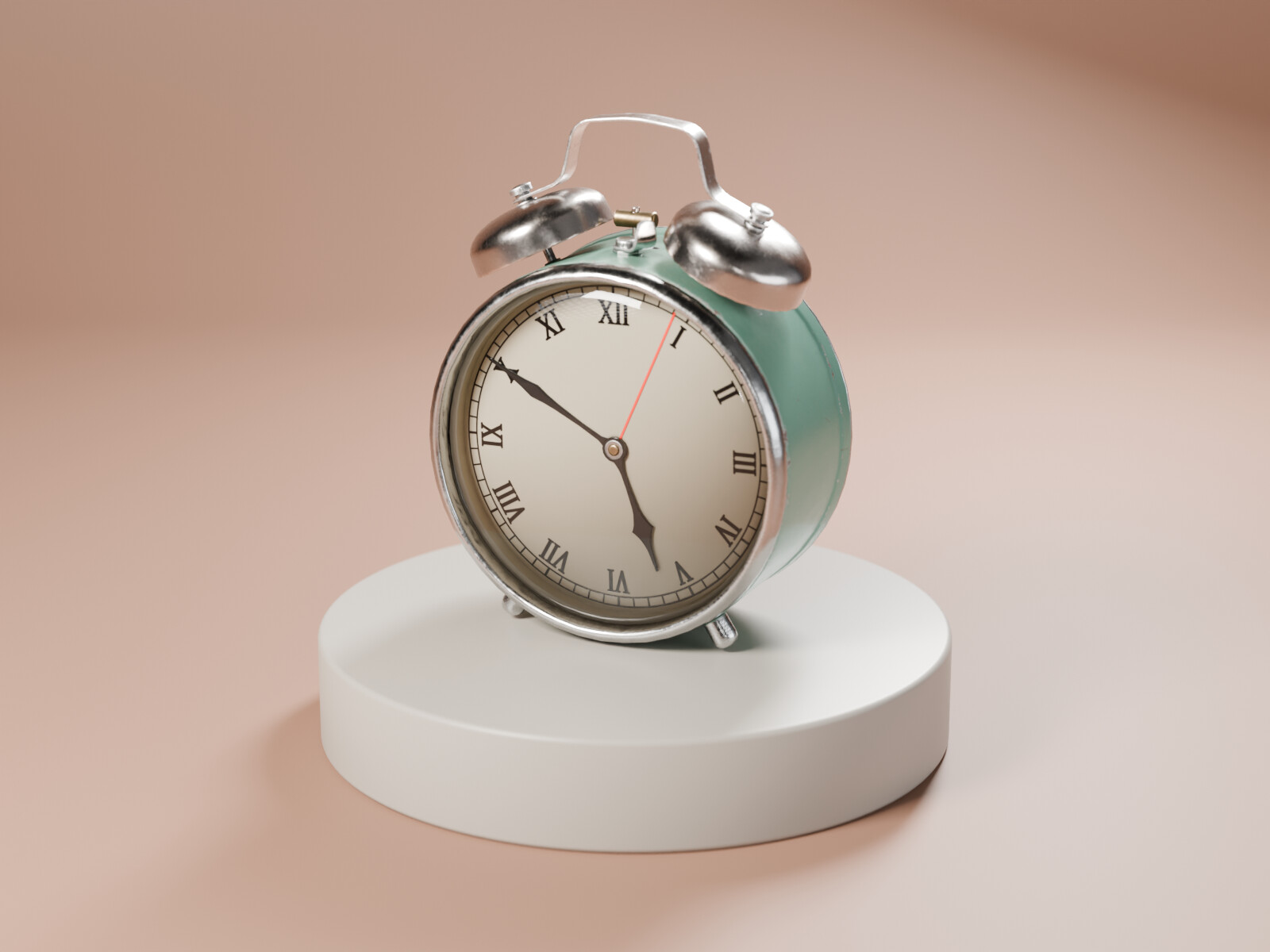
CGI stands for computer-generated imagery. In product work it means building a digital 3D model of the product, giving it accurate materials, and rendering it with virtual lights and a virtual camera. "Hybrid" is the important word in our service name. Rather than rendering everything, hybrid imagery places a rendered product into real photography, called a plate, or combines photographed and rendered elements in one frame.
The craft lies in making the join invisible. That means matching the rendered camera to the real one (focal length, height, angle and perspective), matching the direction, softness and color of light, adding the grain and lens character the photograph has, and running both through the same color pipeline. When any of those drift, the product looks pasted in, even if a viewer cannot say why. Our CGI & Hybrid Imagery service covers three areas of work:
- Camera matching and plate integration: fitting a rendered product into existing or newly shot photography so perspective, light and grain agree.
- CGI lifestyle compositing: placing products into room sets, landscapes or scenes that would be expensive or impractical to build or visit.
- CGI product visualization: clean, fully rendered product images, including views, cutaways and variants that are hard to photograph.
The practical consequence is that CGI does not require the physical product to be in the room, or even to exist yet. It requires accurate source data: CAD files or reference measurements, material samples or references, and clear decisions about color and finish.
What product photography actually is
Product photography is capturing the real object with a camera under controlled light. Our Product Photography service covers e-commerce, apparel, jewelry, furniture and food, and it is organized around three kinds of work that clients ask for most: apparel photography, e-commerce packshots, and food and beverage photography.
What distinguishes good product photography from snapshots is repeatability. Every session runs against a documented setup, recording lighting positions, camera height and lens, background and exposure, with a color reference captured in every session. That is what lets product one hundred match product one, and lets a batch shot in spring sit next to one shot in autumn without a visible shift in color or angle.
Photography starts from the physical product and records what is actually there, including real fabric drape, real food texture and real reflections in metal and glass. It also records every scuff, crease and fingerprint, which is why preparation and retouching are part of the job. Framing, angle and crop decisions apply to both services, and a good brief sets them out the same way whichever route you take.
CGI & hybrid imagery vs product photography, criterion by criterion
The table rates each service on the criteria that decide most projects. The ratings are qualitative and describe how well each approach typically suits the criterion, not a score from any study. Individual projects can move either way.
| Criterion | CGI & Hybrid Imagery | Product Photography |
|---|---|---|
| Starting price | From $120.00 per image | From $32.00 per product |
| Typical turnaround | 5–15 working days | 3–7 working days |
| Needs the physical product | No, if accurate CAD or references exist | Yes, every item must be in the studio |
| Large catalogs of existing items | Weaker: modeling each item is slow | Stronger: repeatable setup, fast per item |
| Many variants of one product | Stronger: change material or color, re-render | Weaker: each variant must be made and shot |
| Impossible or costly scenes | Stronger: scenes can be built digitally | Weaker: sets or locations must be real |
| Organic textures (fabric, food, skin) | Weaker: hard to make convincing | Stronger: the camera records them |
| Hard materials (metal, plastic, glass) | Stronger when well modeled | Strong, with careful lighting |
| Color fidelity to the real product | Depends on material data and pipeline | Stronger: color reference in every session |
| Changing the image later | Stronger: the scene can be re-rendered | Weaker: changes often mean a reshoot |
Read the table as a map of where each approach is at home, not as a tally. A project that needs a hundred existing apparel items on white does not care that CGI is strong on variants. A project that needs one bottle in eighteen finishes, eight weeks before the first bottle comes off the line, does not care that photography is fast per item.
Cost drivers compared
The two services are priced on different units, and that difference matters more than the headline numbers. CGI & Hybrid Imagery starts at $120.00 per image. Product Photography starts at $32.00 per product. The cheaper unit is not always the cheaper job, because complexity and volume move both.
What moves the price of CGI and hybrid images
- Modeling effort. A product supplied as clean, accurate CAD needs far less work than one built from photos and measurements. Soft goods, organic shapes and fine detail take longest.
- Materials. Convincing fabric, brushed metal, frosted glass, liquids and translucent plastics need careful material setup and test renders.
- Scene complexity. A product on a plain background is quick to light and render. A full room set, landscape or plate integration needs camera matching, lighting matching and compositing.
- Number of images and variants. Once a model exists, each additional angle, color or scene reuses that work. This is where CGI becomes efficient.
- Plates. Hybrid work needs photography to integrate into. Whether plates already exist, come from stock you have rights to, or need shooting changes the scope.
What moves the price of product photography
- Product count and angles. Angles per product multiply the number of images and the retouching faster than the product count does.
- Materials and handling. Reflective, transparent, very small or very large items need more lighting time and often more retouching.
- Styling and preparation. Steaming apparel, styling food, and cleaning and assembling products all take set time.
- Retouching depth. Basic cleanup is one thing; compositing, label rebuilding and focus stacking are another. Our guide to product photography retouching decisions explains where that line falls.
- Logistics. Every item has to reach the studio, be checked and go back. For large or fragile products, that is a real cost.
For a fuller treatment of photography budgets across per-product, studio-day and campaign work, see how much product photography costs. The same logic applies here: agree on the unit, then compare like with like.
Turnaround compared
Product photography typically runs 3–7 working days. CGI & Hybrid Imagery typically runs 5–15 working days. Volume moves both more than the choice between them does, but the shape of the schedule is different, and it is worth understanding why.
Photography is front-loaded on logistics and fast in execution. Once products are in the studio and the setup is locked, capture is quick, and most of the remaining time is selects and retouching. The risk to the schedule is physical: samples arriving late, items missing from the delivery, or products needing preparation that nobody planned.
CGI is front-loaded on building. The model and materials have to be made and approved before any final image exists, and approval rounds on color and finish can take time. Once the model is approved, additional images arrive quickly. The risk to the schedule is data: incomplete CAD, missing material references, or changes to the product design after modeling has started.
Approval speed on your side affects both schedules. In photography, the main client approval is selects: choosing the frames that go forward to retouching. In CGI, there are more checkpoints, typically the model, the materials, the lighting and composition, and the final renders. Each checkpoint that waits a few days adds those days to delivery. Nominating one person with authority to approve, and agreeing in advance what they are approving at each stage, is the single most effective way to keep either service inside its typical range.
Which service is "faster" therefore depends on your starting point. If you have 80 finished products on a shelf, photography will get them online sooner. If the products are still at the factory and you need launch images before stock arrives, CGI may be the only way to hit the date at all, because photography cannot start until the product exists.
Quality: what good looks like in each, and how each fails
Both services can produce images that are indistinguishable from each other at a glance. They fail in different ways, and knowing those failure modes is the best way to judge samples and set a quality bar in a brief.
How CGI and hybrid imagery fails
CGI fails when it looks too perfect or not quite physical. Edges that are too sharp, surfaces with no microscopic variation, fabric that does not sag under its own weight, or shadows that do not match the light in the plate all tell a viewer something is off. In hybrid work, the most common failures are perspective that does not match the plate, lighting from the wrong direction or at the wrong color temperature, and a rendered product that is cleaner and sharper than the grainy photograph around it. That is why our process aligns camera, lighting, grain and color pipeline: each is a separate way for a composite to fail a close look.
How product photography fails
Photography fails through inconsistency and inaccuracy. Colors drift between sessions, angles and crops change from one batch to the next, reflections show the studio, and products appear with dust, creases or damaged labels. The remedy is process: a documented, repeatable setup, a color reference in every session, and proper preparation before products reach the set. Those setup decisions, made once and written down, prevent most of these problems.
What to check in samples: For CGI, look at contact shadows, edges and material texture at full size, and check whether the product sits in the same light as its surroundings. For photography, look at a spread of several products together and check whether color, angle, crop and background stay consistent across them.
Color accuracy
Color is where the two approaches differ most in method. Photography measures the real product against a color reference under known light, so accuracy follows from discipline. CGI assigns color through material settings, so accuracy depends on good reference data (physical samples, measured values or approved swatches) and on a controlled color pipeline from render to final file. Both can be accurate. Neither is accurate by default.
Skills, team and inputs
The two services draw on different skill sets, which is why the questions a studio asks at the start look so different.
| Area | CGI & Hybrid Imagery | Product Photography |
|---|---|---|
| Core skills | 3D modeling, material and shader work, lighting and rendering, camera matching, compositing | Lighting, camera work, styling, product preparation, retouching |
| What we need from you | CAD or accurate measurements, material and color references, design approvals, plates if integrating into existing photography | The physical products, a shot list, angle and crop spec, styling references |
| Approval points | Model, materials, lighting and composition, final renders | Setup and test shots, selects, retouched finals |
| Where it can go wrong | Inaccurate source data, late design changes | Late or unprepared samples, growing shot lists |
Because one team covers both, moving between them is a conversation rather than a second supplier. The same people who shoot plates can brief the CGI work that goes into them, and the same color pipeline and quality bar apply to both. If you are curious how the two crafts meet on a single project, CGI and photography hybrid workflows walks through the decisions involved.
How to brief each service
A photography brief is built around the physical products: a complete product list with dimensions and finishes, an angle and crop spec per category, background and file requirements per channel, and references for anything styled. The most useful extra is a note on items that need special handling, such as glass, jewelry or anything that must be assembled or kept cold.
A CGI brief is built around data and decisions: the CAD files or measured drawings, material references for every surface, the exact colors to match with their approved source, the camera angles and crops, and for hybrid work either the plates themselves or a description of the scene to shoot or build. The most useful extra is a clear statement of which design details are final and which may still change, because changes after modeling are the main cause of CGI overruns.
In both cases, three to five reference images showing the look you want remove more ambiguity than a page of adjectives.
Deliverables: what you actually receive
Both services deliver finished image files at the sizes and formats you specify for web, marketplaces, print or advertising. The differences are in what else comes with them and what you can do afterward.
With product photography, you receive retouched final images, typically in the agreed crops and formats per channel. The images are a record of that product in that setup on that day. If the packaging changes, you shoot again, although a documented setup means the new shot will match the old ones.
With CGI, the finished images are the visible deliverable, but the lasting asset is the 3D model and its materials. Once built and approved, the model can produce new angles, new colorways, new scenes and new crops without a reshoot. Agree at the start whether model files are part of the deliverable and on what terms, because that decision affects how you can reuse the work later.
Whichever service you use, write the delivery spec once and make it cover every channel you actually publish to: your own site, each marketplace, email, paid social, wholesale line sheets and print. List the aspect ratios, minimum pixel dimensions, file formats, color space and naming convention for each. A spec written up front means the same image set can be exported for every outlet without a second round of work, and it gives both the photographer and the CGI artist the same target, which matters when the two kinds of image will sit side by side on one page.
Some deliverables lean naturally to one side. Interactive spins can be shot or rendered; our guide to 360-degree product photography decisions covers the trade-offs. Exploded views and cutaways are almost always a CGI job. Fabric on a model, plated food and anything whose appeal is its real texture is almost always a photography job.
When product photography is the right choice
Pick product photography when the products exist, when there are many of them, and when their appeal is in how they really look and feel. Specifically, the job is product photography when it is apparel photography, e-commerce packshots, or food and beverage photography, all of which sit under that service. It is also the natural choice when your deadline suits 3–7 working days rather than 5–15 working days and the product is already on hand.
Pros
- Lower starting unit price, from $32.00 per product.
- Shorter typical turnaround of 3–7 working days.
- Records real texture, drape and food appeal that CGI struggles to fake.
- Efficient at volume: a locked setup handles large catalogs item after item.
- Color accuracy anchored by a color reference in every session.
Cons
- Needs every physical product, prepared and in the studio.
- Each color or variant has to exist and be shot separately.
- Elaborate scenes need real sets or locations, which add cost.
- Changes after the shoot, such as new packaging, usually mean a reshoot.
Photography also fits categories where authenticity is the point. Beauty buyers want to see real texture and true shade, which is why swatch accuracy is a core requirement for cosmetics and beauty products.
When CGI & hybrid imagery is the right choice
Pick CGI & Hybrid Imagery when the product does not exist yet, when one product comes in many variants, when the scene would be impractical or expensive to build or visit, or when the job specifically calls for camera matching and plate integration, CGI lifestyle compositing or CGI product visualization, all of which sit under this service. It also fits when your deadline suits 5–15 working days and the work does not depend on physical samples arriving.
Pros
- No physical product needed if accurate CAD or references exist.
- Variants, colorways and new angles reuse the same model.
- Scenes can be built that would be costly or impossible to shoot.
- Images can be updated later by re-rendering instead of reshooting.
- Cutaways, exploded views and technical visuals are straightforward.
Cons
- Higher starting unit price, from $120.00 per image.
- Longer typical turnaround of 5–15 working days.
- Soft, organic and edible products are hard to make convincing.
- Accuracy depends on the quality of the source data you provide.
CGI is also distinct from generative AI imagery, although the two are often confused. CGI builds a measured model of your actual product and renders it under controlled conditions, so the product is exact. If you are weighing AI tools as well, AI-generated product imagery, done properly explains where they fit and where product accuracy becomes the limiting factor.
A worked comparison (illustrative)
This example is illustrative. The brand and its choices are invented to show how the decision plays out; the only prices used are our published starting rates, and a real quote would depend on the products, angles, complexity and scenes involved.
Imagine a small furniture brand with two needs. First, 12 existing products (side tables, lamps and stools) need clean e-commerce packshots. Second, a new armchair launches in 6 fabric colors, but only one color sample exists, and the brand wants the chair shown in a living room scene for its launch page.
| Need | Best fit | Basis | Starting estimate |
|---|---|---|---|
| 12 existing products on white | Product Photography | 12 products at from $32.00 per product | From $384.00 |
| Armchair in 6 colors, living room scene | CGI & Hybrid Imagery | 6 images at from $120.00 per image | From $720.00 |
| Total starting estimate | Both services | Sum of the two lines | From $1,104.00 |
Look at why each line landed where it did. Rendering 12 side tables and lamps from scratch would mean modeling each item, at a higher unit price, for products that are already sitting in a warehouse. Photographing the armchair in 6 colors would mean waiting for 5 more fabric samples to be made and upholstered, and building or renting a living room set. The cheaper unit in each case is also the more sensible method, but that is not guaranteed: had the armchair needed only one color on white, photographing the single sample would likely have been simpler.
Several things would move this estimate. Fabric is among the harder materials to render convincingly, so the armchair's materials would need careful reference and approval. The living room could be fully rendered or be a photographed plate with the chair integrated, which changes scope. And if the brand later wants the chair in a second room, the existing model makes that an incremental job rather than a new one.
When a project needs both
More often than the question implies, the same job touches both. Launches frequently combine photographed catalog items with rendered hero images for products not yet in stock. Catalogs combine photographed core colors with rendered variants. Lifestyle images often use a photographed room or landscape as the plate and a rendered product placed into it, which is hybrid imagery by definition.
Projects that combine the two work best when they are planned together. The photography setup can be documented so the CGI camera and lighting can match it. The color reference captured in every photography session gives the CGI team a known target. And approvals can run on a single timeline, so the photographed and rendered images arrive together and look like one set.
Because one team covers both, switching is not a disruption either. If the files say the other service is the right answer, we re-quote before doing the work rather than after. If you are not sure which your files need, send two or three real files through the free trial; judging which service fits is part of the trial rather than something quoted separately. For related comparisons where the lines are drawn differently, see CGI & Hybrid Imagery vs Lifestyle & Editorial.
Decision checklist
Run your brief against these questions. If most answers point one way, that is your service. If they split, the project probably needs both.
Before you run the list, it is worth naming the three mistakes we see most often when clients choose on their own. The first is choosing on unit price alone, which pushes variant-heavy projects toward photography and large existing catalogs toward nothing at all, because the budget was set for the wrong method. The second is assuming CGI is always the modern or premium choice, when a well-run photography setup is often both faster and more convincing for real products with real texture. The third is treating the choice as permanent. A catalog can be photographed now and its future variants rendered later, provided the photography setup and color reference are documented well enough for the renders to match.
- Do all the products physically exist and can they reach the studio in time? If yes, photography is viable; if no, CGI may be the only option.
- How many products are there, and how similar are they? Many similar items favor photography's repeatable setup.
- How many variants does each product have? Many colors or finishes of one product favor CGI.
- Is the product's appeal in real texture, such as fabric, food or skin? That favors photography.
- Does the image need a scene that is costly, remote or impossible to build? That favors CGI or hybrid compositing.
- Do you have accurate CAD files or measurements and material references? Without them, CGI takes longer and costs more.
- Is your deadline closer to 3–7 working days or 5–15 working days, and does it depend on stock arriving?
- Will the images need updating later, for new packaging, colors or scenes? Reusable models favor CGI.
- Is exact color match to the physical product critical? Photography with a color reference is the most direct route, and CGI needs reliable swatches.
- Does the project fall under a named specialty, such as apparel, packshots or food on one side, or plate integration, lifestyle compositing or product visualization on the other?
Once you know which way you lean, compare the published rates for each on our Photography & Product Visuals pricing page. The process is the same either way: whichever you pick, the work runs through the same stages and is checked against the same bar.
Verdict Choose product photography for existing products in volume, for apparel, packshots and food, and wherever real texture sells the item; it starts at $32.00 per product and typically runs 3–7 working days. Choose CGI & hybrid imagery for products that do not exist yet, many variants of one product, and scenes that are impractical to shoot; it starts at $120.00 per image and typically runs 5–15 working days. When a project has both kinds of need, use both, planned together by one team.
Where to go from here
- CGI & Hybrid Imagery — what it is, in full, with its own pricing
- Product Photography — the same for the alternative
- Photography & Product Visuals pricing — both rates side by side with the US market ranges
- Try it free — two of your existing shots, edited and color-matched, and we will tell you which of the two your files need
- Get a quote if the scope is already clear
- Every rate we publish, on one page