Selling Jewelry Online, Done Properly
Online sales of fine and fashion jewelry, where material descriptions are regulated.
 MediaScaleUp Editorial Team

Where most projects go wrong
The usual mistakes:
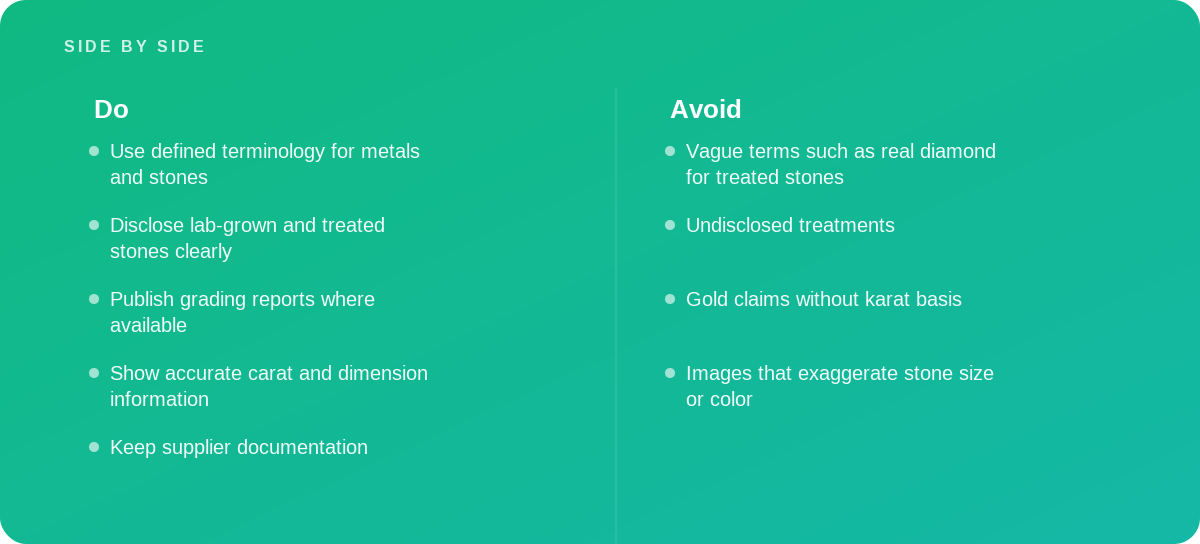
- Vague terms such as real diamond for treated stones
- Undisclosed treatments
- Gold claims without karat basis
- Images that exaggerate stone size or color
What good looks like instead
- Use defined terminology for metals and stones
- Disclose lab-grown and treated stones clearly
- Publish grading reports where available
- Show accurate carat and dimension information
- Keep supplier documentation
Why it matters
Metal and gemstone descriptions have legal definitions, and casual language creates real liability.
The specs that matter
| Measure | Figure |
|---|---|
| Jewelry Guides | the FTC's guides define how metals and stones may be described |
| Lab-grown stones | must be clearly distinguished from mined stones |
| Karat markings | gold content claims have specific requirements |
| Certification | gemstone reports come from grading laboratories |
Knowing when to hand it over
Tip: Bring in help when jewelry descriptions carry claims.
Where this comes from
- Federal Trade Commission — Guides for the Jewelry, Precious Metals, and Pewter Industries
- Federal Trade Commission — Advertising FAQs: A guide for small business
The figures and practices above come from the sources listed.
Working on something like this?
We take on E-commerce Development work for teams who want it done once, properly. Tell us what you are building and we will tell you honestly whether we are the right studio for it. Start a project.
Where to go next
Spotted something wrong? Report an error on this page. We correct on the page and say what changed.